How to Manage Penthouse Suites Maintenance Problems: A Diagnostic Asset Audit
The high-altitude penthouse suite occupies a precarious position within the built environment. These assets represent the pinnacle of architectural ambition, yet they are simultaneously the most vulnerable points in a skyscraper’s structural and mechanical system. Unlike standard residential units, which benefit from the relative stability of the building’s mid-section, the penthouse faces extreme aerodynamic loads, intensified solar exposure, and the complex mechanical challenges of vertical distribution. Consequently, the standard suite of property management protocols proves inadequate. Managing these assets requires a transition from reactive repair models to proactive, predictive diagnostic frameworks.
The complexity of penthouse operations stems from the interaction between high-performance materials and the relentless pressures of the upper atmosphere. When facility managers and asset owners neglect the specialized requirements of these spaces, the results manifest as compounding failures—leaks that trace back to structural settlement, HVAC inefficiencies caused by the stack effect, and accelerated material degradation from relentless UV exposure. These are not merely cosmetic concerns; they are systemic challenges that, if ignored, threaten the long-term capital value of the residence. Effective oversight demands a deep understanding of the building’s mechanical DNA.
This analysis provides a definitive reference for those tasked with the stewardship of elite vertical assets. By deconstructing the systemic realities of high-altitude habitation, we establish a rigorous roadmap for asset preservation. We focus on the intersection of engineering foresight and operational discipline. The objective is to ensure that these residences function not just as trophy properties, but as high-performance, resilient systems capable of maintaining peak utility over decades of service.
Understanding “how to manage penthouse suites maintenance problems”
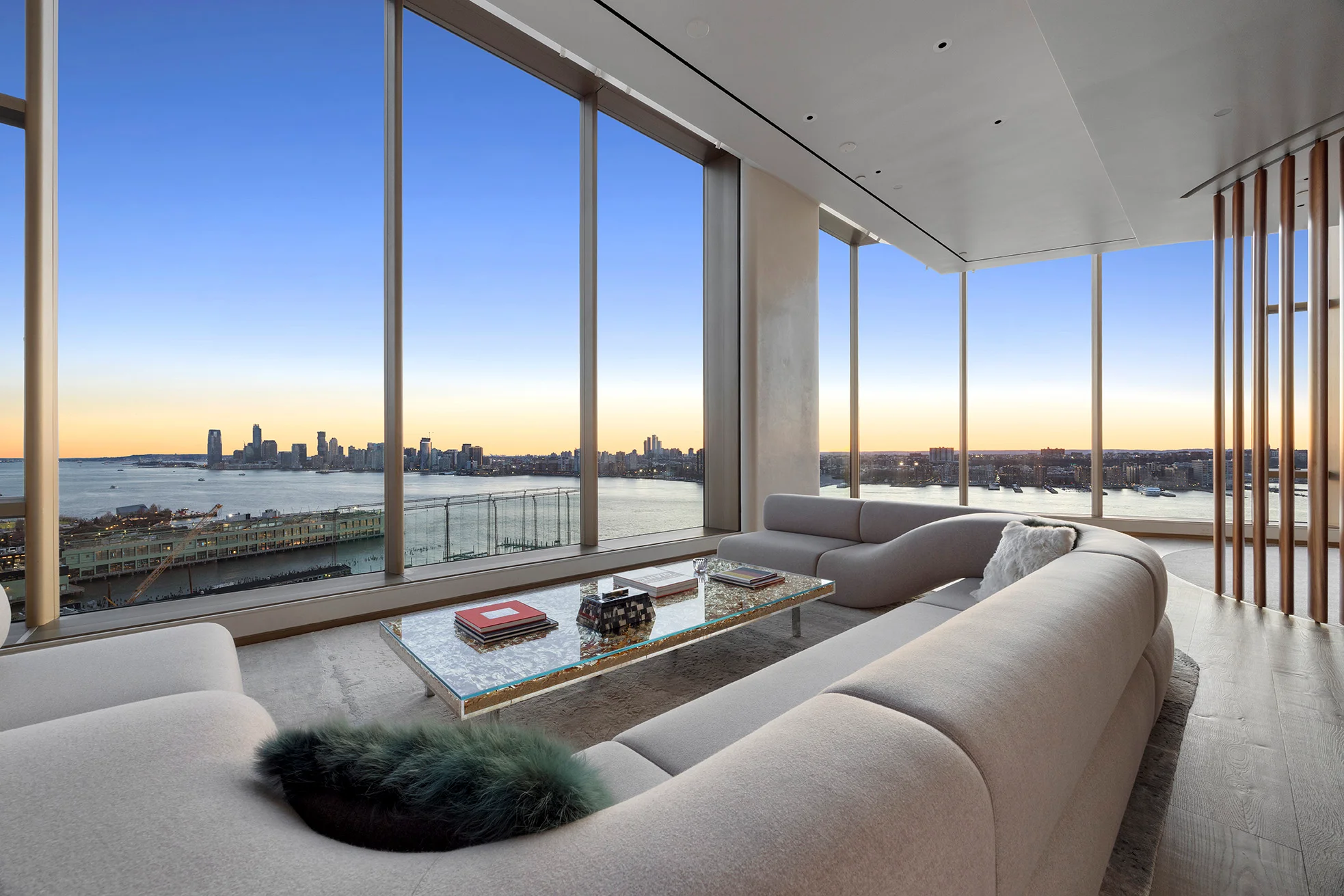
Many observers struggle with how to manage penthouse suites maintenance problems because they apply conventional real estate logic to a high-stakes, industrial-grade environment. A fundamental misunderstanding persists: the belief that a penthouse is a static, finished product. In reality, a skyscraper is a dynamic, swaying assembly. It moves, settles, and expands in response to temperature and wind. Therefore, maintenance is not a periodic task; it is a continuous, integrated process of calibration and response. When management fails to recognize this, minor issues—a hairline crack in a terrace finish or a slight drift in HVAC performance—quickly escalate into structural liabilities.
The risk of oversimplification remains profound. Management teams often prioritize superficial aesthetic fixes over underlying mechanical health, leading to the “Cosmetic Masking Fallacy.” This occurs when managers repair the symptoms of a problem—such as water stains—while failing to address the faulty facade sealing that caused the intrusion in the first place. To learn how to manage penthouse suites maintenance problems effectively, stakeholders must prioritize diagnostic transparency. This requires a rigorous documentation of system performance. It also demands an audit-first approach, where data informs intervention before catastrophic failure occurs. By shifting from a defensive to a diagnostic posture, management preserves both the integrity of the architecture and the long-term investment value of the asset.
Deep Contextual Background: The Evolution of Vertical Habitats
The vertical penthouse has evolved significantly since the early 20th century. Initially, architects viewed these spaces as modest, secondary structures, often serving as decorative caps for the building’s mechanical gear. Today, however, the penthouse serves as the most critical and highest-value component of the super-tall structure. As skyscraper engineering matured, the demand for “complete systems”—buildings that house a residence, professional space, and social club—became the new industry standard.
This evolution is fundamentally a success story of engineering, yet it has created unprecedented maintenance challenges. Contemporary super-tall structures must manage complex aerodynamic forces previously ignored by developers. Furthermore, these towers must function as thermal batteries. They absorb, store, and reject heat, aiming to minimize the massive energy demands of high-altitude glass façades. The current challenge of how to manage penthouse suites maintenance problems centers on these very dynamics: managing the building’s envelope as a living, breathing filter between the inhabitant and the harsh reality of the upper atmosphere.
Conceptual Frameworks for Asset Evaluation
To effectively maintain these assets, we utilize three primary mental models:
-
The Systemic Decoupling Model: Assess the degree to which the unit relies on the building’s common grid. The most resilient units possess localized redundancies—independent HVAC, secondary water filtration, and private high-speed data uplinks—which isolate the occupant from building-wide maintenance cycles.
-
The Aerodynamic-Thermal Audit: Every skyscraper creates a unique micro-climate at its peak. Successful maintenance plans feature facade engineering calibrated to specific, building-specific wind-tunnel data, ensuring the envelope is not just a shield, but an active participant in thermal management.
-
The Latency-Frequency Index: Maintenance costs and occupant frustrations scale with time. Every minute a facility manager spends waiting for common-area access or lift-bank priority is a cost. Efficient oversight prioritizes “frictionless access” to all MEP (Mechanical, Electrical, and Plumbing) nodes.
Key Categories and Operational Variations
| Category | Risk Profile | Primary Operational Demand |
| The Full-Service Tower | High systemic complexity | Continuous calibration of common zones |
| The Residential Pavilion | Focused utility requirements | Private, hyper-specialized maintenance |
| The Mixed-Use “Crown” | Complex logistics/Access control | Multi-user security/Throughput management |
| The Adaptive Reuse Loft | High structural constraint | Legacy MEP remediation/Replacement |
Decision Logic: When determining how to manage penthouse suites maintenance problems, managers must first prioritize the “Service-to-Floorplate Ratio.” Facilities that serve too many occupants with too few transit paths will inevitably suffer from degradation, regardless of how robust the maintenance budget appears on paper.
Detailed Real-World Scenarios
-
The Facade Seal Degradation Scenario: Constant UV exposure and wind shear at 70 stories cause facade seals to brittle over time. Constraint: Immediate exterior repair is impossible due to weather and height. Decision: Deploy an internal secondary moisture-barrier system while waiting for a window-washing-system integration for full exterior replacement.
-
The Vertical Logistics Constraint: A critical chiller component requires replacement, but it is too large for the standard lift. Decision: Develop a temporary service-bridge plan that utilizes the window-washing-davit system for heavy-lift capacity. Failure to plan for this contingency can stall necessary repairs for months, leading to permanent equipment damage.
Planning, Cost, and Resource Dynamics
The economic profile of penthouse maintenance involves high upfront capital and massive recurring expenditures. The complexity premium—the added expense of working at extreme heights—must be central to the planning cycle.
| Cost Component | Relative Impact | Variability |
| Mechanical/MEP Servicing | 35% | Fixed |
| Vertical Transport/Security | 20% | High |
| Facade/Envelope Maintenance | 30% | Medium |
| Contingency/Resilience | 15% | Very High |
Note: Managers must account for the opportunity cost of space. A penthouse with poorly utilized outdoor terrace square footage represents a significant, recurring loss of latent value, as it requires maintenance without providing usage utility.
The Risk Landscape and Systemic Failure Modes
Failure in these environments is often compounding. A minor issue in climate control, for instance, leads to catastrophic staff overtime as they attempt to manually stabilize the interior environment.
-
Digital Fragility: Integrated smart-home controls become liabilities if they lack modularity. Managers must prioritize environments that allow for component-level upgrades rather than total system replacements, which are logistically infeasible at height.
-
Thermal Fatigue: Expansion and contraction of structural materials at extreme heights lead to inevitable seal failures. If not addressed by a rigid, quarterly inspection schedule, these failures compromise the building envelope and lead to unsustainable energy spikes.
Governance, Maintenance, and Long-Term Adaptation
To understand how to manage penthouse suites maintenance problems, planners must adopt a proactive, layered governance structure:
-
Quarterly Diagnostic Cycles: Automated testing of HVAC, electrical redundancies, and leak-detection arrays is not optional.
-
Trigger-Based Audits: Establish clear thresholds for when to decommission a failing system rather than continuously patching it. A standard rule is to initiate an upgrade if maintenance exceeds 20% of replacement costs within a 12-month period.
-
Digital Twins: Maintain a comprehensive record of every system layout and repair. This ensures that future adaptations rely on precision data rather than guesswork, which is critical when navigating the labyrinthine infrastructure of a skyscraper.
Measurement, Tracking, and Evaluation
Evaluation must focus on the delta between expected and actual performance:
-
Leading Indicators: Energy consumption per square foot, frequency of smart-system error codes, and service response time for mechanical issues.
-
Lagging Indicators: Total expenditure per occupancy day relative to industry benchmarks for similar-tier assets.
-
Qualitative Signals: User feedback regarding the “frictionlessness” of the residence, which correlates strongly with the efficiency of the underlying mechanical systems.
Common Misconceptions and Oversimplifications
-
“High altitude is always better.” Extreme height increases wind and solar stress, necessitating significantly higher maintenance costs than mid-level units.
-
“Buildings are static structures.” Super-tall towers are dynamic systems that move; this movement must be accounted for in the structural integrity of finishes.
-
“Smart technology equals efficiency.” Without manual, physical overrides, over-automation in high-altitude environments is a major risk factor.
-
“Prestige is a metric of success.” Brand name is a marketing tool. Operational uptime is the only metric that matters for a long-term asset.
Conclusion
Understanding how to manage penthouse suites maintenance problems is an exercise in discerning the intersection of architectural ambition and engineering reality. The true apex of these environments is found where technical performance meets human-centric comfort. By focusing on the structural realities of vertical life and rejecting superficial indicators of prestige, one can identify locations that serve as high-performance, resilient assets. The future of this market belongs to those who view the residence not as a trophy, but as a sophisticated, adaptable system that must be managed with the same rigor as an industrial installation. In the final analysis, the value of an elite residential asset lies in its ability to provide a consistent, high-functioning environment regardless of the external conditions, proving that even at the highest level, the foundation—mechanical and logistical—is everything.