How to Plan Penthouse Suites Parties on a Budget: A Strategic Audit
The penthouse suite, by its very nature, suggests a tier of luxury that often feels detached from fiscal constraints. Yet, the reality of managing these assets—or utilizing them as private venues—frequently demands a rigorous commitment to operational discipline. When the objective involves hosting sophisticated events within these vertical environments while maintaining strict financial control, the challenge shifts from pure luxury to masterful logistics. Success here requires moving beyond the aesthetic allure of the view and focusing instead on the mechanical and structural systems that underpin the experience.
Planners often encounter friction when attempting to reconcile the prestige of high-altitude spaces with the limitations of a defined budget. The key lies in shifting the focus from high-cost, high-visibility spending—such as expansive catering or elaborate installations—toward high-impact, low-cost operational efficiencies. By understanding the building’s internal constraints, such as transit limitations and atmospheric pressures, one can mitigate costs that often remain hidden to the untrained eye. This discipline transforms the event from an expensive, fragile undertaking into a resilient, high-performance social utility.
This analysis provides a comprehensive roadmap for stakeholders who must navigate the logistical landscape of vertical hospitality. We move past the traditional event-planning manuals to address the systemic realities of the skyscraper environment. Through a diagnostic approach to procurement, transit, and environment management, we provide a definitive reference for those seeking to maximize social utility within these unique spaces while maintaining absolute fiscal rigor.
Understanding “how to plan penthouse suites parties on a budget”

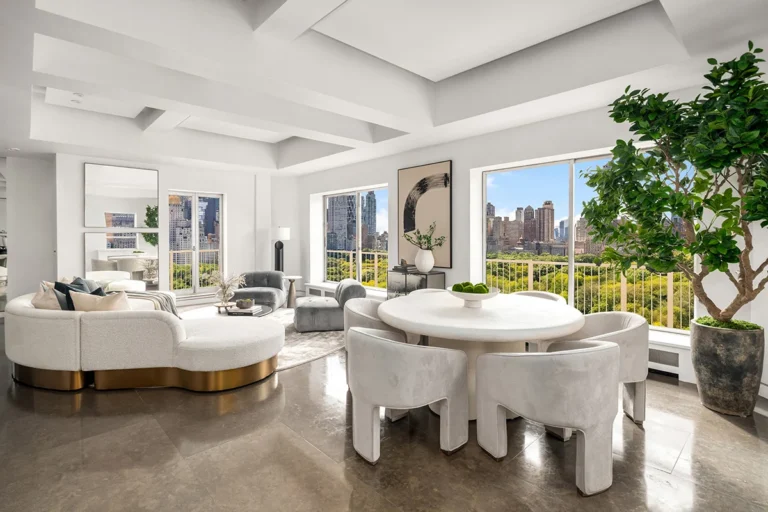
When professionals explore how to plan penthouse suites parties on a budget, they often make the mistake of assuming that the venue’s prestige mandates expensive secondary service providers. In reality, the most fiscally successful events are those that leverage the inherent value of the space itself. A penthouse with a panoramic vista requires minimal aesthetic enhancement. Planners who force ornate, low-altitude event standards onto these spaces not only waste capital but also distract from the building’s unique architectural character. Mastery in this domain requires a subtractive approach: identifying what is truly necessary to support the event and ruthlessly eliminating anything that fails to serve a specific, operational function.
Oversimplification frequently leads to the “Logistic Latency Fallacy.” This occurs when hosts ignore the high cost of moving goods and people through a super-tall tower. Learning how to plan penthouse suites parties on a budget requires acknowledging that every minute a catering crew spends waiting for a service lift is a tangible expense. The most fiscally efficient plans are those that synchronize all activities with the building’s established vertical transit schedules. By optimizing the “Frictionless Transit” of resources, planners reduce labor costs and service-provider fees significantly. Ultimately, success relies on a diagnostic mindset, shifting the focus from the aesthetic “what” to the operational “how.”
Deep Contextual Background: The Evolution of Vertical Hospitality
The vertical residence has historically tracked rapid urban densification. Initially, these spaces functioned as simple rooftop voids. They have since evolved into critical structural nodes within the modern skyscraper. Early verticality relied on masonry and static loads; in contrast, today’s towers represent dynamic, swaying assemblies. Modern engineers design these structures to dissipate massive aerodynamic loads. This evolution has fundamentally altered the requirements of the high-altitude host.
This systemic shift moved the burden of cost from the venue’s rental fee to the complexity of the delivery system. Today, the most successful social-utility assets address the “stack effect.” This phenomenon involves the vertical movement of air within a tower. To counter this, designers utilize pressurized lobbies and individual unit seals. Recognizing this context remains essential for any professional attempting to identify how to plan penthouse suites parties on a budget. By doing so, they shift their focus from superficial decorations toward the fundamental mechanical reliability of the environment.
Conceptual Frameworks for Asset Evaluation
To evaluate the fiscal health of an event effectively, we employ three specific mental models:
-
The Operational Decoupling Model: Assess how much the event relies on common building systems. Efficient events utilize localized redundancies—such as independent climate control—to minimize the risk of building-wide failures or service charges during critical event windows.
-
The Circulation-Latency Framework: Every minute a staff member spends navigating a congested lobby represents a cost passed to the host. Because of this, evaluating the “latency” of the service team is critical to the host’s success.
-
The Technical Redundancy Audit: Social hosting involves complex systems—including lighting and sound—that are prone to failure. We evaluate verified redundancy in power and connectivity to ensure that operational volatility does not disrupt an event.
Key Categories and Operational Variations
| Category | Operational Profile | Primary Utility |
| The Full-Floor Pavilion | 24/7 dedicated service | Maximum privacy and site control |
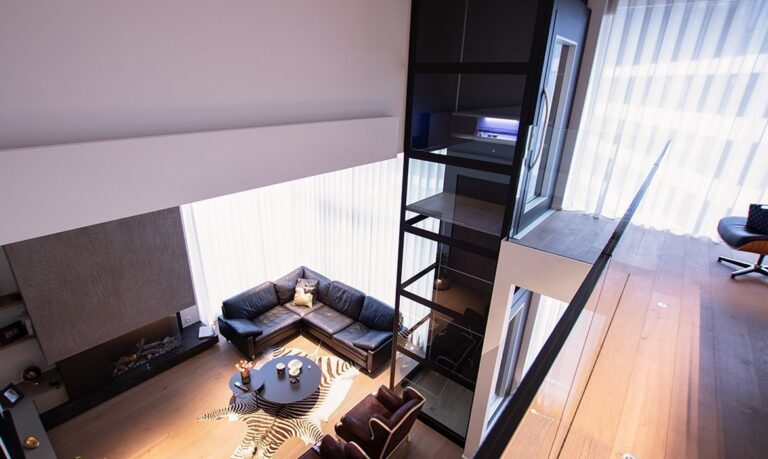
| The Vertical Duplex | Internal lift/service bridge | Separation of public and private spheres |
| The Terrace-First Estate | Extreme seasonal exposure | Biophilic integration/Dynamic hosting |
| The Crowned Super-Tall | Premium iconicity | Panoramic reach and status |
Decision Logic: When evaluating strategies for how to plan penthouse suites parties on a budget, prioritize the “Service-to-Floorplate Ratio.” A unit with a massive floorplate that requires an army of staff members for basic maintenance will always be more prone to fiscal bloat than a high-efficiency unit that utilizes smart-building technology to automate routine facility management.
Detailed Real-World Scenarios
-
The Atmospheric Pressure Challenge: At extreme heights, the stack effect causes temperature fluctuations. Decision: Utilize the building’s existing, integrated smart-climate systems rather than renting external, high-power HVAC units. Second-order effect: External units often require complex, expensive fire-department permits for rooftop installation.
-
The Vertical Logistics Constraint: A primary elevator bank fails, threatening VIP arrivals. Decision: A high-resiliency plan must feature a dedicated service lift that bypasses the main bank. Consequently, the host’s timeline remains unimpeded by public traffic, avoiding late-night labor premiums.
Planning, Cost, and Resource Dynamics
The economic profile of these elite events involves significant variables. The “Complexity Premium” of managing a residence at extreme heights is often where the most significant failures occur if managed without rigor.
| Cost Component | Relative Impact | Variability |
| Facility Management (MEP) | 20% | Fixed |
| Logistical Service Fees | 35% | High |
| Security/Insurance Overlay | 25% | Medium |
| Energy/Environmental Control | 20% | High |
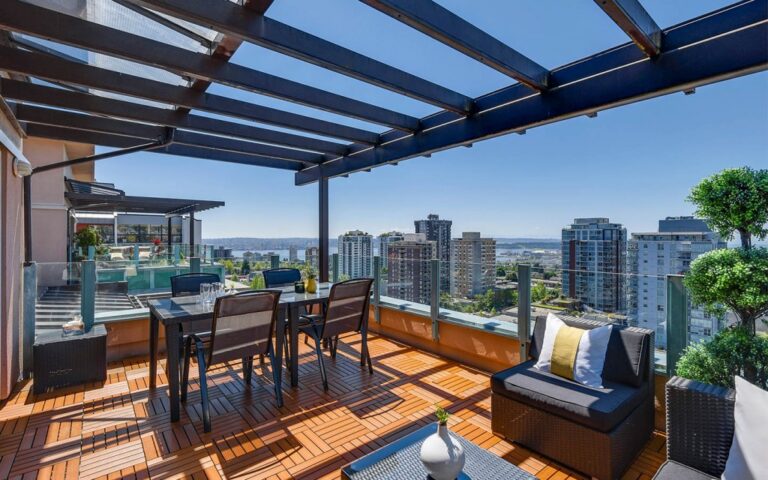
Note: The opportunity cost of space is critical. A penthouse with poorly utilized outdoor terrace square footage represents a significant, recurring loss of value. Optimizing how that space is integrated—or excluding it if it provides no mission-critical utility—is a vital step in those learning how to plan penthouse suites parties on a budget.
The Risk Landscape and Systemic Failure Modes
Failure in high-altitude event management is often compounding. A minor issue with transit delays, for instance, leads to catastrophic service-staff overtime as they attempt to manually stabilize the environment.
-
Systemic Obsolescence: Integrated smart-home systems become expensive liabilities if they are not modular. Prioritize assets with hardware that allows for low-cost upgrades rather than total system replacements.
-
Thermal Inefficiency: Exterior seal failures at high elevations create significant energy losses. Proactive thermal imaging inspections prevent long-term spikes in utility costs and maintain internal climate stability.
Governance, Maintenance, and Long-Term Adaptation
To maintain the standards of financial discipline, planners must adopt a proactive, layered governance structure:
-
Quarterly Diagnostic Cycles: Automated testing of HVAC, electrical redundancies, and leak-detection arrays.
-
Trigger-Based Audits: Establish clear thresholds for when to decommission a failing system rather than continuously repairing it.
-
Digital Twin Management: Maintain a comprehensive record of every system layout and repair to ensure future adaptations rely on precision rather than trial-and-error.
Measurement, Tracking, and Evaluation
Evaluation should focus on the delta between expected and actual performance:
-
Leading Indicators: Energy consumption per square foot, frequency of smart-system error codes, and service response time for mechanical issues.
-
Lagging Indicators: Total expenditure per occupancy day relative to industry benchmarks for similar-tier assets.
-
Qualitative Signals: Client feedback regarding the frictionlessness of the stay, which correlates strongly with the efficiency of the underlying operational systems.
Common Misconceptions and Oversimplifications
-
“High ceilings are always superior.” Excessive volume creates expensive climate-control demands. The most efficient spaces use volume selectively.
-
“Penthouse living is naturally quiet.” High-altitude winds create unique acoustic signatures that require expensive remediation if not considered during design.
-
“Smart systems save energy.” Without expert tuning, an over-automated home is often less efficient than a simple, manual one.
-
“Negotiation is the only path to value.” Operational streamlining, not negotiation, provides the largest and most sustainable gains in fiscal quality.
Conclusion
The effort to determine how to plan penthouse suites parties on a budget is essentially an inquiry into the intersection of operational ambition and logistical reality. The true apex of elite hospitality is found where technical performance meets human-centric comfort. By focusing on the structural realities of vertical habitation and rejecting superficial markers of prestige, one can identify residences that serve as high-performance, resilient assets. The future of this market belongs to those who view the planning process not as a series of disconnected purchases, but as a sophisticated, adaptable system that evolves alongside the requirements of the occupants. In the final analysis, the path to cost reduction lies in the ability to provide a consistent, high-functioning service environment regardless of external conditions, proving that even at the highest level, a disciplined, data-driven approach to facility operations is the foundation of long-term economic sustainability.