How to Avoid Penthouse Suites Security Risks: A Strategic Audit
The penthouse suite represents the absolute ceiling of private residential security. Yet, its position at the apex of a skyscraper introduces a unique set of vulnerabilities that defy traditional home-security paradigms. When we analyze the security profile of these environments, we move beyond simple intrusion detection into the realm of systemic threat management. High-altitude living requires a radical shift in perspective, where the building’s core infrastructure—its vertical transport, its thermal-management systems, and its communication nodes—becomes the first line of defense. The physical residence is not a standalone fortress; it is a critical node in a larger, complex urban machine.
Securing these assets demands an understanding of the interplay between physical, digital, and operational security. A common failure in the sector is the reliance on isolated, high-end gadgets while neglecting the systemic weaknesses inherent in the tower’s design. If the building’s lift logic is compromised, or if the localized HVAC system is susceptible to external manipulation, the most sophisticated biometric lock remains effectively useless. True security in the penthouse environment is found in the creation of a “hardened envelope”—a multi-layered defense strategy where systems are decoupled, redundant, and constantly monitored for anomalous behavior.
This guide provides a comprehensive audit of the security challenges facing high-altitude residential assets. We aim to move beyond the superficial gloss of “luxury” to address the hard engineering and operational discipline required to protect a high-stakes residence. By deconstructing the systemic vulnerabilities that exist at the crown of a tower, we establish a rigorous framework for stakeholders—owners, facility managers, and corporate security directors—to audit their assets, identify systemic gaps, and implement a resilient, long-term security architecture.
Understanding “how to avoid penthouse suites security risks”
When professionals explore how to avoid penthouse suites security risks, they often fall into the trap of viewing security as a static purchase—a suite of cameras, sensors, and locks. This is a profound error. Security is not a product; it is a process of continuous, dynamic calibration. The risks associated with high-altitude assets are constantly shifting alongside advancements in building technology and external threats. A security plan drafted three years ago is, by definition, already outdated. The primary challenge is not just identifying the threats of today, but building an infrastructure that can adapt to the threats of tomorrow.
Oversimplification in this sector manifests as the “Visible Security Fallacy,” where the presence of guards and cameras is used to mask deeper, more insidious vulnerabilities in the building’s digital or mechanical framework. Learning how to avoid penthouse suites security risks requires one to look beneath the surface at the building’s “invisible” attack surfaces. These include insecure IoT integrations within the building’s management system, poorly configured vertical transit software, or even the subtle acoustic leakage of the building envelope itself. By adopting a diagnostic mindset—one that treats the entire tower as an integrated threat landscape—one moves from passive, reactive security to active, preemptive defense.
Deep Contextual Background: The Evolution of Vertical Habitats
The vertical residence has historically followed the rapid densification of the urban core, evolving from simple rooftop voids into the most critical structural and financial elements of the modern super-tall skyscraper. Early verticality was defined by masonry; today, it is a dynamic, swaying assembly of high-performance glass, steel, and complex digital management. This evolution has fundamentally altered the security requirements of the occupant.
Today’s skyscraper is a data-rich environment. Every system—from the elevators to the air-handling units—is managed by a central building management system (BMS). While this provides unprecedented convenience, it also creates a massive, singular point of failure. If the BMS is compromised, the penthouse becomes a “soft target.” Recognizing this systemic shift is essential for any professional determining how to avoid penthouse suites security risks, as it shifts the focus from traditional physical security to a sophisticated convergence of cyber and structural defense.
Conceptual Frameworks for Asset Evaluation
To evaluate the security health of these assets, we employ three specific mental models:
-
The Systemic Decoupling Model: Identify how much of the penthouse’s security depends on the building’s common systems. High-utility units possess localized redundancies—independent alarm monitoring, secondary access control, and dedicated power for security systems—which insulate the occupant from building-wide system compromises.
-
The Attack Surface Auditing Framework: We map every potential point of entry, not just doors and windows. This includes digital ports, internal service tunnels, and the building’s shared ventilation infrastructure, which can be manipulated if not properly isolated.
-
The Operational Latency Framework: In an emergency, the time between a breach and a response is the most critical metric. We evaluate security plans based on the “Response Latency” of the private and public security teams, prioritizing environments with dedicated, onsite teams who understand the unique structural layout of the tower.
Key Categories and Operational Variations
| Category | Typical Threat Profile | Primary Security Demand |
| The Full-Floor Pavilion | High-level targeted intrusion | Constant 24/7 onsite perimeter control |
| The Vertical Duplex | Complex access-point management | Internal lift/service-bridge hardening |
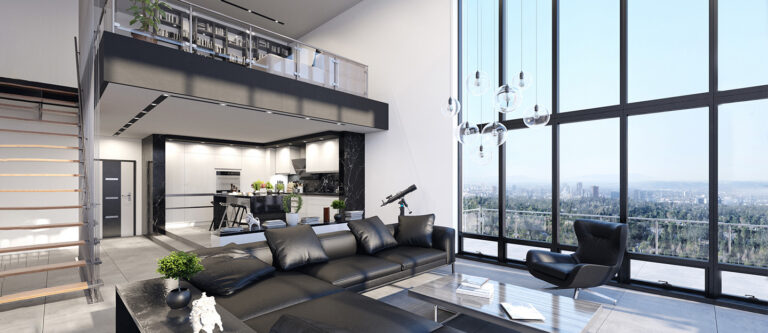
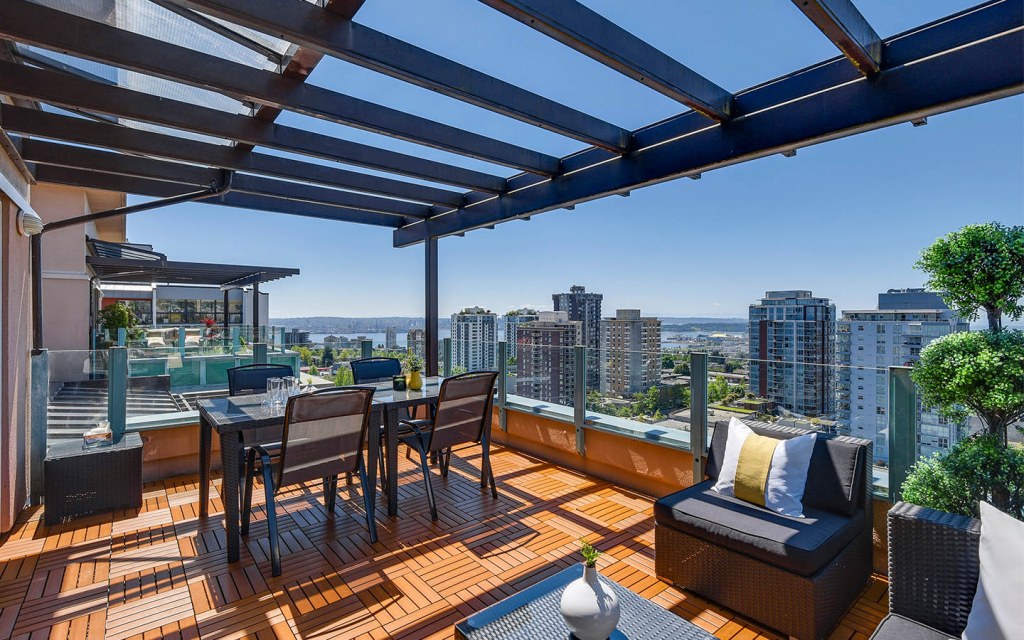
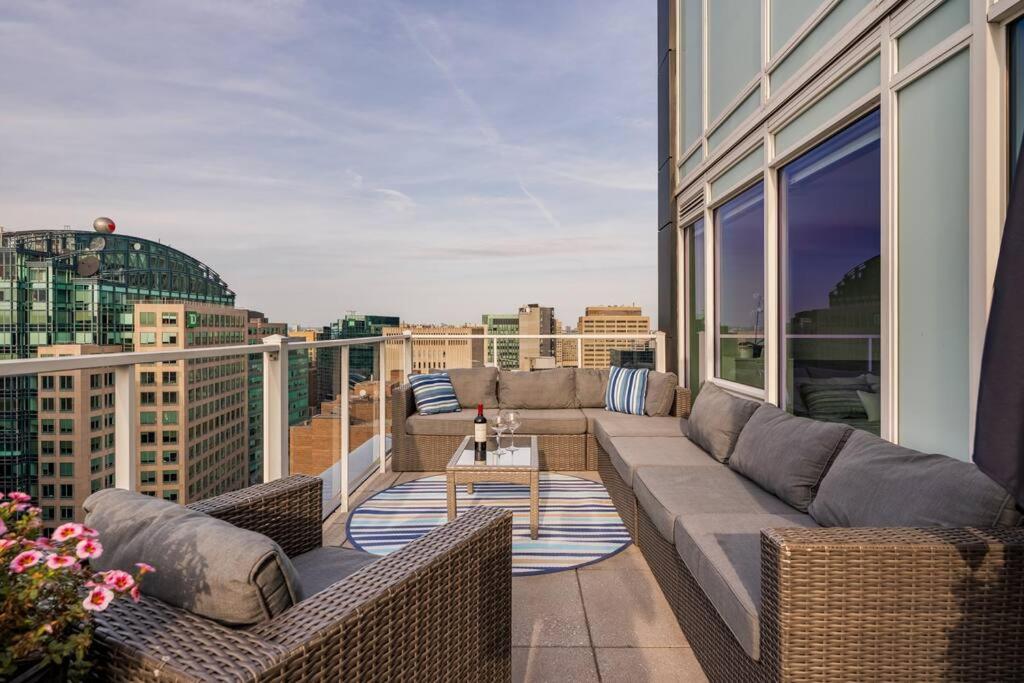
| The Terrace-First Estate | Extreme external exposure | Dynamic perimeter sensing/Shielding |
| The Crown Unit | Digital/BMS system vulnerability | Cyber-physical isolation protocols |
Decision Logic: When the time comes to determine how to avoid penthouse suites security risks, prioritize the “Building-Unit Integration Ratio.” A facility that keeps the penthouse security protocols entirely independent of the general building security team is significantly more resilient than one that relies on a single, shared, and likely overworked staff.
Detailed Real-World Scenarios
-
The BMS Intrusion Scenario: An external party compromises the tower’s central HVAC controller to create an environmental hazard in the penthouse. Constraint: The unit’s climate control is tied to the central system. Decision: Install an independent, air-gapped climate management system for the penthouse, ensuring that the occupant retains control regardless of the building’s digital state.
-
The Lift-Access Vulnerability: Unauthorized access via a service elevator. Decision: A high-resiliency unit must feature an encrypted, multi-factor credential requirement for the lift’s top-floor lockout. Failure mode: Relying on a standard, building-wide keycard system, which is easily cloned or intercepted.
Planning, Cost, and Resource Dynamics
The economic profile of these assets involves high upfront costs and significant recurring operational expenditures. The “Complexity Premium” of securing a residence at extreme heights is where value-conscious planning becomes essential.
| Cost Component | Relative Impact | Variability |
| Cyber-Physical Hardening | 30% | Very High |
| On-Site Security Personnel | 40% | Fixed |
| Access Control/Hardware | 20% | Medium |
| Emergency Redundancy/Backups | 10% | High |
Note: Managers must account for the opportunity cost of low-security design. An asset with weak security protocols is a long-term liability that requires more expensive insurance and higher turnover.
The Risk Landscape and Systemic Failure Modes
The landscape of risk in the sector of how to avoid penthouse suites security risks is dominated by compounding variables. A single point of failure rarely results in a total loss, but it often triggers a cascade of secondary issues.
-
Environmental Degradation: Constant UV and wind exposure on high-altitude terraces accelerates the aging of materials, including sensors and camera mounts. If these are not replaced on a rigid schedule, they become blind spots.
-
Digital Fragility: Complex integrated systems become liabilities if they are not modular. Prioritize assets that allow for independent, component-level upgrades rather than total system replacements.
Governance, Maintenance, and Long-Term Adaptation
To master the environment of high-altitude residential security, one must adopt a proactive, layered governance model:
-
Quarterly Diagnostic Cycles: Automated testing of alarm sensors, digital access logs, and power-backup systems.
-
Trigger-Based Audits: Establish clear thresholds for when to decommission a failing system rather than continuously patching it.
-
Building Digital Twins: Maintain a comprehensive record of every system layout and security protocol to ensure future adaptations rely on precision rather than guesswork.
Measurement, Tracking, and Evaluation
Evaluation should focus on the delta between expected and actual performance:
-
Leading Indicators: Frequency of unauthorized access attempts, latency of the security-system alert logs, and the frequency of system-sensor error codes.
-
Lagging Indicators: Total maintenance cost relative to baseline units and the frequency of security-related complaints during high-occupancy periods.
-
Qualitative Signals: Client satisfaction with the “frictionlessness” of the security experience, which correlates strongly with the efficiency of the underlying mechanical and digital systems.
Common Misconceptions and Oversimplifications
-
“High-floor units are inherently more secure.” Elevation increases risk exposure. The most secure units prioritize the building core over the perimeter.
-
“Buildings are static structures.” Super-tall towers are dynamic systems that move; this must be accounted for in the physical placement of sensors and cameras.
-
“Smart systems are a risk-mitigation tool.” Without manual overrides, over-automation is a major security risk factor.
-
“The view is the defining feature.” The view is a marketing metric. Security and systemic reliability is the defining feature of a premium residential asset.
Conclusion
Understanding the landscape of how to avoid penthouse suites security risks is an exercise in discerning the intersection of architectural ambition and engineering reality. The true apex of residential security is found where technical performance meets human-centric vigilance. By focusing on the structural realities of vertical habitation and rejecting superficial indicators of prestige, one can identify residences that serve as high-performance, resilient assets. The future of this market belongs to those who view the residence not as a trophy, but as a sophisticated, adaptable system that must be managed with the same rigor as an industrial installation. In the final analysis, the value of these assets lies in their ability to provide a consistent, high-functioning environment regardless of the external conditions, proving that even at the highest level, the foundation—mechanical, digital, and logistical—is everything.