How to Reduce Penthouse Suites Catering Expenses: A Strategic Audit
The delivery of premium hospitality services at extreme altitudes represents one of the most complex logistical challenges in the luxury real estate sector. When hosting events within high-rise penthouses, the operational friction created by vertical transit, limited staging space, and building-wide security protocols often leads to significant cost inflation. Catering in these environments is not a standard culinary undertaking; it is a high-stakes industrial operation that must function within the rigid constraints of a skyscraper’s infrastructure. To achieve financial efficiency without compromising service quality, planners must look beyond surface-level menu pricing and address the systemic logistical bottlenecks that drive up expenses.
True optimization in this environment requires a move away from traditional event planning models. A penthouse suite is a confined, high-exposure venue that demands precision. Every element, from the arrival of raw ingredients to the disposal of waste, must be mapped against the building’s transit limitations. When stakeholders investigate how to reduce penthouse suites catering expenses, they are fundamentally inquiring about the minimization of logistical latency and the reduction of resource redundancy. The financial success of these events is rarely determined by the cost of the ingredients alone; instead, it is determined by the efficiency of the delivery system and the robustness of the pre-event planning phase.
This analysis provides a rigorous, data-driven roadmap for the professional management of high-altitude catering. We bypass industry platitudes to focus on the mechanical, structural, and logistical realities that define this niche. By deconstructing the financial DNA of vertical hospitality, we offer a definitive reference for stakeholders—asset managers, corporate event planners, and high-net-worth property overseers—tasked with maintaining the prestige of these venues while imposing strict financial discipline. Efficiency at this level is not about cutting corners; it is about eliminating waste through sophisticated, evidence-based process design.
Understanding “how to reduce penthouse suites catering expenses”
The investigation of how to reduce penthouse suites catering expenses frequently suffers from a narrow focus on procurement. Many planners assume that negotiating lower unit costs for food and beverage will yield meaningful savings. In practice, procurement represents only a fraction of the total expenditure. The primary drivers of cost in high-altitude environments are logistical, specifically regarding vertical transit, service labor duration, and building-access fees. A professional must understand that a skyscraper is a series of bottlenecks. Every minute a staff member spends waiting for an elevator, or every hour an event runs overtime due to poorly planned staging, compounds the final invoice in a way that food costs never can.
Oversimplification in this sector presents a significant risk. The “Premium-Pricing Fallacy”—the belief that the building’s prestige justifies inflated catering operational costs—serves as a barrier to fiscal discipline. When probing how to reduce penthouse suites catering expenses, it becomes clear that the most successful organizers are those who view the building’s infrastructure as a component of the catering team. They utilize the building’s own vertical transport schedules to time deliveries, they design menus that require minimal on-site preparation to reduce labor hours, and they negotiate bulk-logistics contracts that treat the building as a long-term partner rather than a transactional vendor. Achieving mastery in this domain requires a diagnostic mindset, shifting the focus from the culinary “what” to the operational “how.”
Deep Contextual Background: The Evolution of Vertical Hospitality
The evolution of the penthouse as an event venue tracks the rapid densification of urban centers. Early 20th-century verticality was anchored in masonry, where the “penthouse” was a modest, secondary structure atop a stable, static building. The shift toward the modern super-tall structure fundamentally altered this relationship. Today’s tower is a dynamic, swaying assembly, designed to dissipate massive aerodynamic loads. The host now invites guests into a space requiring constant energy input, precise environmental stabilization, and specialized logistical support.
This systemic evolution has moved the burden of cost from the food’s ingredient list to the complexity of the delivery system. The modern catering requirement is now an integrated, high-performance operation that must account for building-wide security, sophisticated fire-suppression regulations, and the unique atmospheric pressures of the crown of the tower. Recognizing this context is essential for any expert attempting to determine how to reduce penthouse suites catering expenses, as it shifts the focus from simple menu planning to infrastructure auditing and logistical foresight.
Conceptual Frameworks for Asset Evaluation
To evaluate and compare the fiscal efficiency of these operations, we utilize three distinct mental models:
-
The Operational Latency Framework: Costs scale with time. Every minute a staff member spends navigating a congested lobby or an inefficient lift bank is a cost passed to the host. We evaluate operations based on their “Frictionless Transit” score, prioritizing menus and staff deployments that minimize time spent in transit.
-
The Structural-Impact Model: Identify the extent to which catering operations rely on the building’s common systems. Operations with localized staging, private service-lift access, and dedicated waste-removal routes are inherently more cost-efficient because they avoid common-area congestion fees.
-
The Complexity Premium Audit: High-altitude environments involve hidden costs—specialized insurance, safety compliance for high-rise kitchens, and premium labor rates. We audit these costs against the total event budget to ensure that the “Complexity Premium” does not exceed the value of the hospitality provided.
Key Categories and Operational Variations
| Category | Typical Service Profile | Primary Operational Demand |
| The Full-Floor Pavilion | 24/7 dedicated service | High-stakes presence; focused utility |
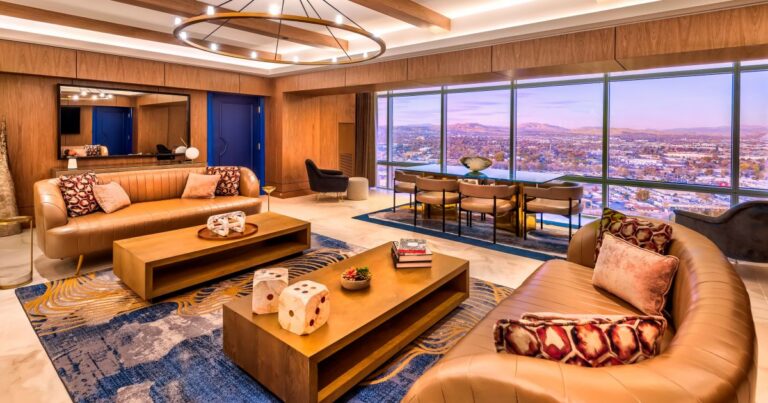
| The Vertical Duplex | Internal lift/service bridge | Logistical complexity; vertical integration |
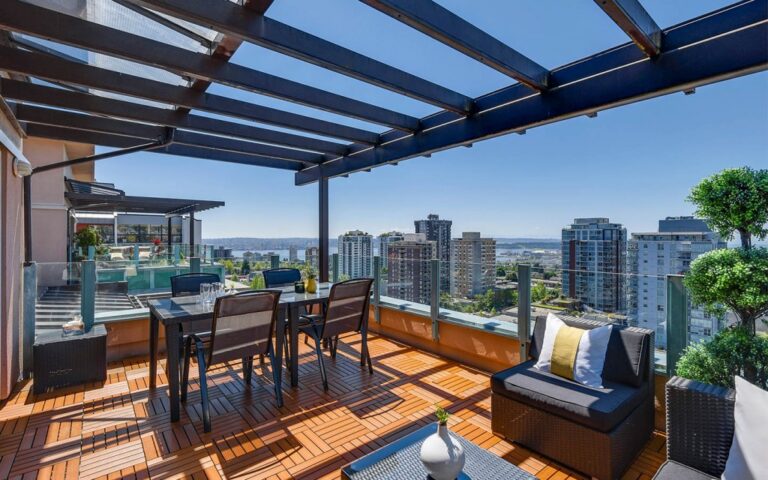
| The Terrace-First Estate | Extreme seasonal exposure | Automated environmental controls |
| The Crown Unit | Premium-heavy/Iconicity | Duration-based negotiation; high throughput |
Decision Logic: When the time comes to define the strategies for how to reduce penthouse suites catering expenses, prioritize the “Service-to-Floorplate Ratio.” A unit with a massive floorplate that requires an army of staff members for basic service will always be more prone to fiscal bloat than an efficient unit that utilizes specialized, high-density culinary techniques to automate routine tasks.
Detailed Real-World Scenarios
-
The Multi-Day Corporate Summit: The requirement is seamless security and high-frequency catering transitions. Decision: Prioritize a “staged-in” model where the bulk of the infrastructure arrives during off-peak hours. Failure mode: Inadequate localized storage in the suite, forcing multiple expensive, elevator-intensive trips during the event.
-
The High-Altitude Biophilic Event: The goal is high-quality terrace usage at 60+ stories. Decision: Choose menus that feature room-temperature or cold-held items to bypass the requirement for complex, fire-safety-certified cooking equipment on the deck. Second-order effect: Using heating equipment on a high-altitude terrace often triggers expensive, unnecessary fire-department standby requirements.
Planning, Cost, and Resource Dynamics
The economic profile of catering in these elite spaces involves significant variables. The “Complexity Premium” is often where the most significant savings can be identified if managed with rigor.
| Cost Component | Relative Impact | Variability |
| Food/Beverage Procurement | 25% | Low |
| Labor (Logistics/Transit) | 40% | High |
| Building Access/Security Fees | 20% | Medium |
| Equipment/Waste Disposal | 15% | High |
Note: The opportunity cost of space is critical. A penthouse with poorly utilized kitchen space represents a significant, recurring loss of value. Optimizing the flow within this space is a vital step for those learning how to reduce penthouse suites catering expenses.
The Risk Landscape and Systemic Failure Modes
Failure in high-altitude catering management is often compounding. A minor issue with transit delays, for instance, leads to catastrophic service-staff overtime as they attempt to compensate for the lost time.
-
Systemic Obsolescence: Catering equipment that is deeply integrated into the building’s smart systems becomes an expensive liability if it is not modular. Prioritize assets with hardware that allows for low-cost, component-level upgrades.
-
Safety Compliance Bloat: High-rise structures have unique fire-safety requirements. Managers who fail to pre-approve catering equipment often find themselves facing emergency compliance costs at the eleventh hour.
Governance, Maintenance, and Long-Term Adaptation
To maintain the standards of financial discipline, planners must adopt a proactive, layered governance structure:
-
Quarterly Diagnostic Cycles: Automated testing of service access, lift-load capacities, and waste-removal logistics.
-
Trigger-Based Audits: Establish clear thresholds for when to decommission a service provider rather than continuously managing their logistical inefficiencies.
-
Digital Twin Management: Maintain a comprehensive record of every system layout and repair to ensure future adaptations rely on precision rather than trial-and-error.
Measurement, Tracking, and Evaluation
Evaluation should focus on the delta between expected and actual performance:
-
Leading Indicators: Transit-time logs, frequency of service-system error codes, and equipment setup times.
-
Lagging Indicators: Total expenditure per guest day relative to industry benchmarks for similar-tier assets.
-
Qualitative Signals: Client feedback regarding the frictionlessness of the service, which correlates strongly with the efficiency of the underlying operational systems.
Common Misconceptions and Oversimplifications
-
“High-floor catering is naturally more expensive.” Only if the logistics are poorly planned. Efficiency is a design choice, not an inevitable cost.
-
“Buildings are static structures.” Super-tall towers are dynamic systems; this movement must be accounted for in the structural integrity of the catering layout.
-
“Smart technology equals efficiency.” Without manual, physical overrides, over-automation in high-altitude environments is a major risk factor.
-
“Negotiation is the only path to value.” Operational streamlining, not negotiation, provides the largest and most sustainable gains in fiscal health.
Conclusion
The effort to identify how to reduce penthouse suites catering expenses is essentially an inquiry into the intersection of operational ambition and logistical reality. The true apex of elite hospitality is found where technical performance meets human-centric comfort. By focusing on the structural realities of vertical habitation and rejecting superficial markers of prestige, one can identify residences that serve as high-performance, resilient assets. The future of this market belongs to those who view the catering process not as a series of disconnected purchases, but as a sophisticated, adaptable system that evolves alongside the requirements of the occupants. In the final analysis, the path to cost reduction lies in the ability to provide a consistent, high-functioning service environment regardless of external conditions, proving that even at the highest level, a disciplined, data-driven approach to facility operations is the foundation of long-term economic sustainability.