How to Avoid Penthouse Suites Risks: A Diagnostic Framework
The penthouse, by virtue of its elevation and architectural prominence, occupies a unique position in the global real estate and hospitality market. It is often regarded as the ultimate realization of design ambition, yet this elevation introduces a distinct set of structural, operational, and environmental vulnerabilities that are frequently ignored in standard property discourse. The reality of high-altitude habitation is one of constant mechanical strain, where the building must actively defend its interior environment against extreme wind loads, intense thermal gain, and the inherent logistical challenges of vertical access.
For the high-stakes investor or the corporate entity securing these assets, the process of selection is often marred by a focus on aesthetic prestige rather than mechanical integrity. This misallocation of priorities creates a structural blind spot. The most successful occupants treat the penthouse as a complex, high-performance machine, recognizing that the “prestige” of the address is secondary to the functional reliability of the building’s core systems. Without this diagnostic mindset, the asset becomes a compounding liability, susceptible to technical failures that remain invisible until they manifest as significant service interruptions or structural degradations.
This analysis establishes a definitive reference for identifying, auditing, and neutralizing the vulnerabilities associated with apex residential assets. We move past the marketing veneer to provide an evidence-based roadmap for those who demand precision and security. By deconstructing the systemic risks inherent in vertical development, we offer a rigorous methodology for evaluating these units—ensuring that the investment is protected by a comprehensive understanding of the built environment’s limitations and requirements.
Understanding “how to avoid penthouse suites risks”

The challenge of how to avoid penthouse suites risks is fundamentally an exercise in decoupling luxury from performance. This assumption is a primary driver of risk. The penthouse is subject to the same physical laws as any other floor, yet it faces these forces at their peak intensity. Risks do not arise solely from poor design; they emerge from the interaction between the occupant’s expectations and the building’s mechanical limits.
Oversimplification in this sector occurs when observers conflate “status” with “resilience.” A penthouse might offer an unparalleled view, but if its floorplan does not prioritize the redundancy of utilities—water, power, and high-speed data—it remains a single point of failure in the broader structure. To truly learn how to avoid penthouse suites risks, one must adopt a diagnostic approach, analyzing the building’s mechanical DNA. This involves assessing the adequacy of private vertical transport, the durability of the exterior facade in extreme weather, and the independence of the unit’s climate control. By acknowledging that these risks are inherent to the vertical model, the occupant can implement the oversight necessary to mitigate them effectively.
Deep Contextual Background: The Evolution of Vertical Vulnerability
The vulnerability of the modern penthouse is a direct result of the “super-tall” trend. In the early 20th century, buildings were static, mass-timber or masonry structures where gravity was the primary force to consider. Today, super-tall towers are dynamic, swaying structures that must manage complex aerodynamic loads and thermal expansion on a massive scale. As these buildings have reached for new altitudes, the complexity of the life-support systems required to make them habitable has increased exponentially.
This evolution has created a “systemic layering” effect. A penthouse unit today is not merely a floor in a building; it is a node in a massive, interconnected mechanical grid. If the building’s central chilled-water system fails, or if a localized elevator bank requires maintenance, the penthouse feels the impact first and most severely. This reality necessitates a management strategy that prioritizes local autonomy. The most secure assets are those that have successfully decoupled themselves from the building-wide dependency, utilizing independent systems to ensure continuity of operations.
Conceptual Frameworks for Risk Management
To manage the inherent volatility of apex residential assets, we employ three specific mental models:
-
The Mechanical Independence Model: How much does the unit rely on the building’s common systems? High-resiliency units possess independent HVAC zones, localized water filtration, and secondary power backups, reducing the risk of a building-wide failure becoming a personal crisis.
-
The Aerodynamic-Thermal Audit: Does the facade account for the specific wind-tunnel effects of the tower’s geometry? Every super-tall structure creates unique micro-climate vortices; the best assets are those where the facade engineering is specifically calibrated to handle these localized conditions.
-
The Operational Redundancy Audit: If the primary service path (the main elevator) is unavailable, what is the contingency? Secure assets prioritize units with dual service transit paths—one for public access and one for private facility maintenance.
Key Categories and Architectural Variations
| Category | Risk Profile | Primary Mitigation Strategy |
| The Full-Floor Pavilion | High mechanical dependency | Localized utility independence |
| The Vertical Duplex | Logistical complexity/Internal lift | Mandatory secondary internal lift |
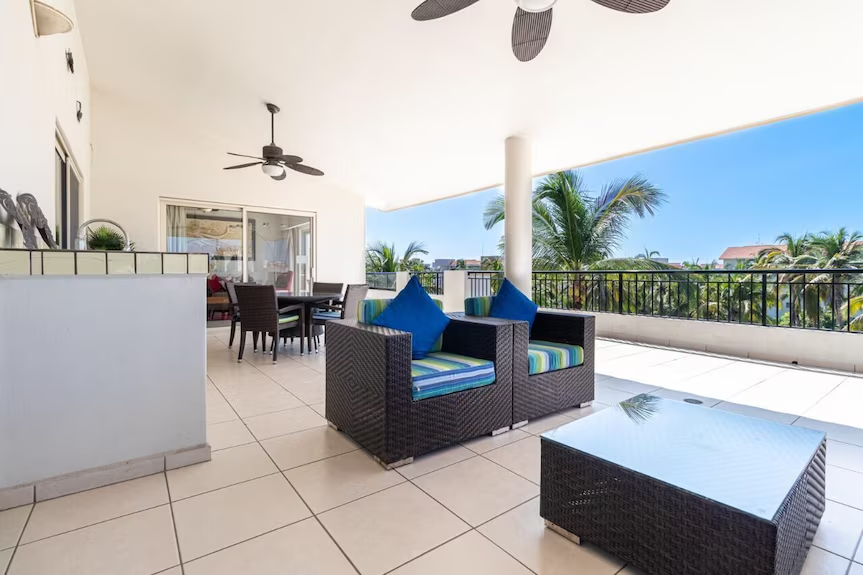
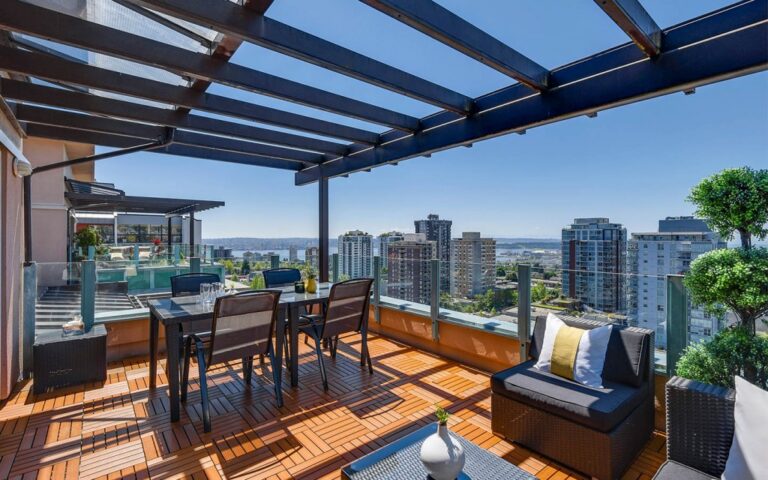
| The Terrace-First Estate | Extreme environmental exposure | Automated wind/rain sensor arrays |
| The Super-Tall “Crown” | Resonance/Vibration issues | Tuned Mass Damper (TMD) verification |
| The Podium-Top Loft | Acoustic/Vibration (from tower) | Sound-dampened floorplate isolation |
Decision Logic: When evaluating potential properties and determining how to avoid penthouse suites risks, prioritize the building’s structural maintenance history. A tower with a transparent, digitized record of its mechanical upgrades is significantly lower-risk than a high-prestige address with obfuscated service logs.
Detailed Real-World Scenarios
-
The Super-Tall Resonance Scenario: The building experiences low-frequency oscillation during high-wind events. Constraint: The unit’s interior finishings are brittle (stone, glass). Decision: Prioritize units that explicitly feature a tuned mass damper or structural base isolation to prevent micro-vibrations from cracking non-structural elements.
-
The Vertical Logistics Failure: The primary service elevator bank fails during a critical occupancy. Constraint: There is no secondary service bridge. Decision: A high-risk asset that requires a secondary, dedicated facility lift to bypass the main bank entirely.
Planning, Cost, and Resource Dynamics
Mitigating risk requires upfront capital investment that functions as an insurance policy for the asset’s utility.
| Risk Component | Relative Impact | Variability |
| Systemic Mechanical Failure | 30% | High |
| Envelope/Facade Integrity | 25% | Medium |
| Vertical Transport Delay | 25% | High |
| Connectivity/Data Resilience | 20% | Medium |
Note: The cost of failing to audit these risks far outweighs the cost of the audit itself. An unmitigated failure in high-elevation infrastructure can necessitate months of remedial work.
The Risk Landscape and Systemic Failure Modes
The landscape of risk in the penthouse sector is dominated by compounding variables. A single point of failure rarely results in a total loss, but it often triggers a cascade of secondary issues.
-
Environmental Degradation: Constant UV and wind exposure on high-altitude terraces accelerates the aging of materials, leading to potential structural compromises if seals are not replaced on a rigid schedule.
-
Systemic Obsolescence: Complex integrated systems—like smart-home controls—become liabilities if they are not modular. Prioritize assets that allow for independent, component-level upgrades.
Governance, Maintenance, and Long-Term Adaptation
To master how to avoid penthouse suites risks, owners and managers must adopt a proactive, layered governance model:
-
Quarterly Diagnostic Cycles: Automated testing of HVAC, electrical redundancies, and leak-detection arrays.
-
Trigger-Based Audits: Establish clear thresholds for when to upgrade a system rather than merely repairing it. A common rule is to upgrade if maintenance exceeds 20% of the replacement cost within a 12-month period.
-
Documentation Standards: Maintain a “building digital twin”—a record of every system layout and repair—to ensure future adaptations rely on precision rather than guesswork.
Measurement, Tracking, and Evaluation
Evaluation should focus on the delta between expected and actual performance:
-
Leading Indicators: Energy consumption per square foot, frequency of smart-system error codes, and service response time for mechanical issues.
-
Lagging Indicators: Total maintenance cost relative to baseline building units and the frequency of service-related complaints during high-occupancy periods.
-
Qualitative Signals: Client satisfaction with acoustic and thermal stability during peak wind/weather events.
Common Misconceptions and Oversimplifications
-
“High-floor units are inherently better”: Elevation increases risk exposure. The most secure units prioritize the building core over the perimeter.
-
“Buildings are static structures”: Super-tall towers are dynamic systems that move; this movement must be accounted for in the structural integrity of the finishes.
-
“Smart systems are a risk-mitigation tool”: Without manual overrides, over-automation is a major risk factor.
-
“The view is the defining feature”: The view is a marketing metric. Structural and mechanical reliability is the defining feature of a penthouse.
Conclusion
Understanding how to avoid penthouse suites risks is an exercise in discerning the intersection of architectural ambition and engineering reality. The true apex of residential design is found where technical performance meets human-centric comfort. By focusing on the structural realities of vertical habitation and rejecting superficial indicators of prestige, one can identify residences that serve as high-performance, low-risk assets. the value of the penthouse lies in its ability to provide a consistent, high-functioning environment regardless of the external conditions, proving that even at the highest level, the foundation—mechanical and logistical—is everything.