Compare Penthouse Suites VIP Services: A Strategic Asset Audit
The apex of the modern residential and hospitality market is defined by more than square footage or architectural silhouette. It is defined by the invisible infrastructure of service. When an occupant secures a penthouse, they are not merely purchasing or leasing a static volume of space; they are entering a high-performance ecosystem. In this domain, the quality of life is determined by the “service density”—the degree to which the facility anticipates, manages, and executes the occupant’s needs without friction. As the global standard for elite living shifts toward hyper-personalized, ultra-secure, and logistically integrated environments, the ability to discern the true efficacy of these support systems has become a critical competency for the sophisticated stakeholder.
To inhabit these spaces is to engage with a complex, swaying vertical structure that functions as a critical infrastructure node. Consequently, the “VIP” services provided within these environments must be as resilient and precise as the building’s own mechanical systems. A service plan that relies on reactive, human-only labor is inherently vulnerable to error and latency. Conversely, the most robust service ecosystems leverage an integrated model—a synthesis of data-driven facility management, proprietary logistics, and highly trained human oversight. This shift from “hospitality as a luxury amenity” to “hospitality as a managed utility” marks the current threshold of the top-tier market.
This analysis provides a definitive audit of the high-end service landscape. We move beyond the glossy marketing of lifestyle publications to address the hard systems—the security protocols, the supply chain logistics, and the thermal and acoustic management—that dictate the performance of a penthouse. By deconstructing the systemic requirements of these assets, we establish a rigorous framework for owners, facility managers, and sophisticated residents to evaluate, maintain, and optimize environments that provide genuine, lasting value at the pinnacle of our urban centers.
Understanding “compare penthouse suites VIP services”
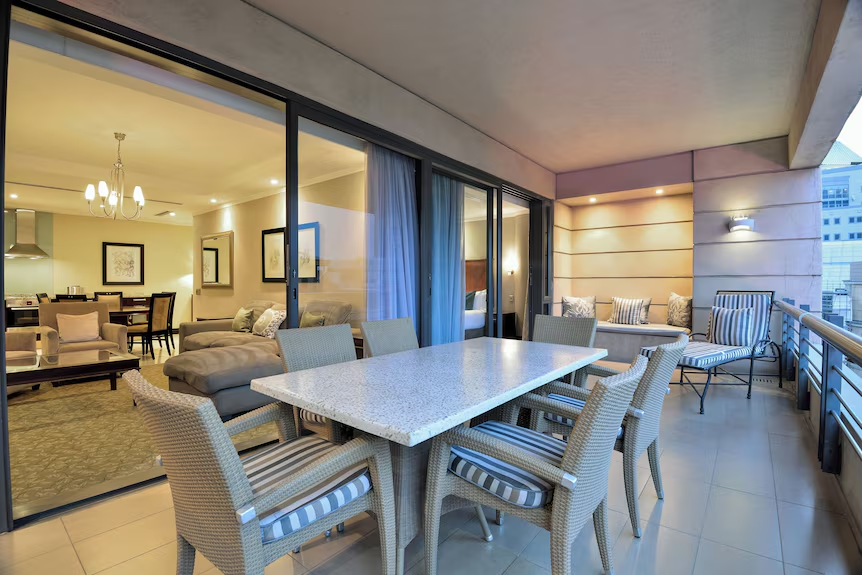
When we attempt to compare penthouse suites VIP services, we must first reject the binary view of these offerings as either “concierge” or “butler” support. Instead, we must categorize them as high-performance social and logistical assets. A common misunderstanding involves the assumption that a service team’s prestige is a sufficient indicator of their utility. In reality, prestige is a commodity; it is the atmospheric comfort, the acoustic shielding, and the logistical accessibility that define the quality of the service. An elegant greeting is of little use if the underlying logistical chain for deliveries, security vetting, or environmental stabilization is flawed.
Oversimplification frequently leads to the “Maintenance-Neglect Fallacy.” Stakeholders often invest heavily in the initial design of a penthouse experience but fail to budget for the aggressive, recurring costs of high-altitude facility management. Learning how to compare penthouse suites VIP services requires an audit of the facility’s longevity strategy. One must inquire about the structural load capacity of the floor, the accessibility of the building’s mechanical systems, and the rigor of the service-level agreements (SLAs). These are the technical, invisible metrics that dictate whether a service ecosystem thrives as a long-term asset or fades into a degraded, high-cost liability.
Deep Contextual Background: The Evolution of Vertical Hospitality
The American rooftop has a complex history. In the early 20th century, these spaces were strictly utilitarian. The arrival of the modern office tower necessitated massive HVAC units, leaving little room for human occupancy. By the 1960s, however, the concept of the “sky garden” began to permeate architecture. Designers recognized that the psychological relief provided by elevated green space was a potent antidote to the claustrophobia of urban density.
As cities became more crowded, the economic necessity to maximize every square foot transformed these spaces into highly managed venues. We now see the maturation of this trend. Today’s most successful luxury service models are characterized by high levels of automation. They integrate lighting, sound, and thermal management into the building’s central digital brain. This evolution has moved the burden of cost from the architectural design phase into the facility management phase. Understanding this history is crucial, as it informs the reality that these services require constant, data-driven stewardship to remain relevant.
Conceptual Frameworks for Asset Evaluation
To audit the health of an elevated retreat and its support structure, we employ three mental models:
-
The Atmospheric Buffer Model: Identify the effectiveness of the space’s wind mitigation and solar management. A service team that offers no protection from the building’s micro-climate is fundamentally limited in its functional utility.
-
The Circulation-Latency Index: How easily can staff and residents traverse the building to reach the penthouse? In a 60-story tower, if the transit logistics are not optimized, the service becomes a logistical burden rather than an amenity.
-
The Structural Load-Resilience Framework: A penthouse is an active landscape. We evaluate the service asset based on its ability to support weight—not just of people, but of mature plantings, water features, and the necessary furniture to support professional-grade hosting.
Key Categories and Operational Variations
| Category | Primary Operational Risk | Secondary Utility |
| The Managed Residential Suite | Biological maintenance/Drainage | Biophilic calm; acoustic absorption |
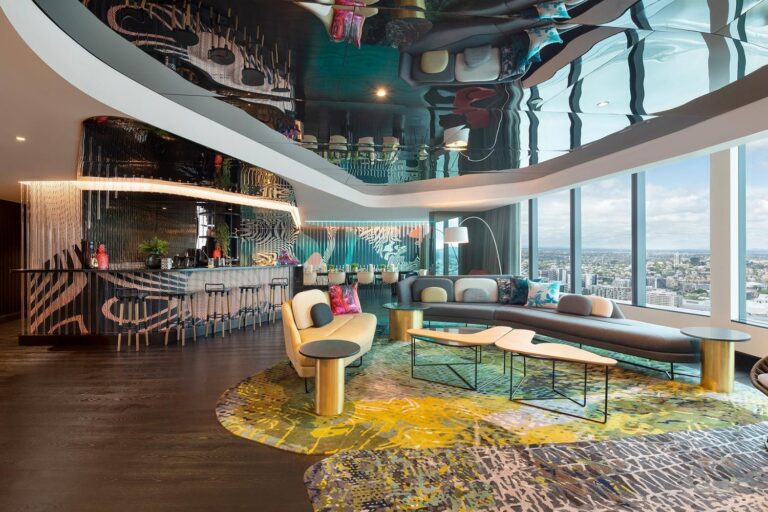
| The High-Altitude Hotel Lounge | Access throughput/Sound control | Nighttime social activity; event venue |
| The Industrial-Adaptive Penthouse | Structural settling/Facade aging | Historical narrative; expansive scale |
| The Corporate Sky-Residence | Security oversight/Privacy management | Professional meetings; exclusive access |
Decision Logic: When you compare penthouse suites VIP services, prioritize the “Service-to-Floorplate Ratio.” A space that is too large for the available management staff to maintain will suffer from rapid aesthetic and operational decline.
Detailed Real-World Scenarios
-
The Seasonal Climate Constraint: A penthouse in a northern city faces harsh winter exposure. Decision: Implement automated, retractable roofing structures that permit year-round utility while protecting the interior finishes. Failure Mode: Leaving high-quality wood or fabric finishes exposed to sub-zero temperatures leads to rapid, irreparable material degradation.
-
The Wind-Harmonic Interference: The lounge experiences wind speeds that make conversation impossible. Decision: Install high-performance, clear acoustic glass barriers integrated into the parapet. Second-order effect: This mitigates noise pollution to the floors below, ensuring the retreat does not become a nuisance to the building’s residential tenants.
Planning, Cost, and Resource Dynamics
The economic profile of these services is heavily weighted toward long-term maintenance. The “Complexity Premium” of operating at the crown of a tower is often underestimated.
| Cost Component | Relative Impact | Variability |
| Waterproofing/Sealants | 25% | High |
| Landscaping/Biological | 30% | Very High |
| Automation/Security/AV | 25% | Medium |
| Structural/MEP Maintenance | 20% | Fixed |
Note: The opportunity cost of space is critical. An asset that is not programmed for specific, high-utility use cases will become a financial drain as the building management prioritizes the upkeep of more active, revenue-generating floors.
The Risk Landscape and Systemic Failure Modes
Failure in these environments is often compounding. A minor issue with drainage, for instance, leads to long-term structural water ingress that compromises the integrity of the floors below.
-
Systemic Obsolescence: Integrated automation systems become expensive liabilities if they are not modular. Prioritize services that utilize hardware allowing for low-cost upgrades rather than total system replacements.
-
Thermal Fatigue: Expansion and contraction of materials at height lead to inevitable seal failures. If not addressed by a rigid, quarterly inspection schedule, these failures compromise the building envelope and lead to significant, permanent water damage.
Governance, Maintenance, and Long-Term Adaptation
To master the environment of these spaces, planners must adopt a proactive, layered governance model:
-
Quarterly Diagnostic Cycles: Automated, non-destructive testing of drainage capacity, waterproofing, and structural integrity.
-
Trigger-Based Audits: Establish clear thresholds for when to decommission or refresh an aging landscape, rather than continuously patching it.
-
Digital Twin Management: Maintain a comprehensive record of every system layout and repair to ensure future adaptations rely on precision rather than trial-and-error.
Measurement, Tracking, and Evaluation
Evaluation should focus on the delta between expected and actual performance:
-
Leading Indicators: Energy consumption per square foot, frequency of sensor-based error codes, and service response time for mechanical issues.
-
Lagging Indicators: Total maintenance expenditure relative to industry benchmarks for similar-tier, high-altitude assets.
-
Qualitative Signals: User satisfaction with the “frictionlessness” of the space, which correlates strongly with the efficiency of the underlying mechanical and logistical systems.
Common Misconceptions and Oversimplifications
-
“Penthouse services are inherently quiet.” High-altitude winds create unique acoustic signatures that require expensive remediation if not addressed.
-
“Green roofs are maintenance-free.” Mature landscaping at altitude requires a dedicated horticultural team, as these environments are effectively deserts for plant life.
-
“The view defines the asset.” Views are a commodity; structural, acoustic, and environmental reliability define an elite penthouse service.
-
“Automation is a set-it-and-forget-it solution.” Complex integrated systems require constant calibration to adapt to changing environmental conditions.
Conclusion
The effort to compare penthouse suites VIP services is fundamentally a diagnostic exercise. It requires moving away from the aesthetic veneer of luxury into the mechanical heart of the skyscraper. The true apex of these environments is found where technical performance meets human-centric comfort. By focusing on the structural realities of vertical life and rejecting superficial indicators of prestige, one can identify locations and service models that serve as high-performance, resilient assets. The future of this market belongs to those who view the service experience not as a trophy, but as a sophisticated, adaptable system that must be managed with the same rigor as an industrial installation. In the final analysis, the value of an elevated asset lies in its ability to provide a consistent, high-functioning environment regardless of external conditions, proving that even at the highest level, the foundation—mechanical, logistical, and systemic—is everything.