Best Penthouse Suites for Digital Nomads: A Professional Operational Audit
The intersection of nomadic work culture and the extreme luxury of top-floor residential units has created an entirely new category of accommodation. For the professional whose work requires both extreme focus and a high-degree of mobility, the penthouse suite offers a singular environment. It provides a sequestered, high-performance space that transcends the limitations of standard urban living. Yet, this pairing is not without friction. A suite designed for leisure is not automatically a space optimized for high-bandwidth, high-stakes remote operations. The transition from a traveler to a resident-professional at these heights requires a fundamental recalibration of what one demands from a living environment.
Choosing a residence for long-term remote work involves more than assessing the aesthetics of the view. It requires an audit of the building’s digital infrastructure, the ergonomics of the space, and the reliability of the local support systems. While many properties market themselves as tech-friendly, the reality for the power user is often different. High-altitude environments frequently contend with signal degradation, complex management-enforced network limitations, and a lack of ergonomic variety. Successfully navigating this market requires the traveler to approach these units as an asset manager would—evaluating the utility and the long-term feasibility of the workspace before committing to a stay.
This pillar article provides a definitive roadmap for evaluating and selecting high-altitude residences that truly support the requirements of remote professionals. We avoid the superficial allure of marketing imagery to address the mechanics of connectivity, architectural ergonomics, and systemic reliability. By deconstructing the systemic failures that often plague the remote work experience, we establish a rigorous framework for identifying environments that function as true, high-performance offices. The analysis focuses on resilience, professional utility, and sustainable living, providing a reference for those seeking to master the complexities of professional life in the clouds.
Understanding “best penthouse suites for digital nomads”
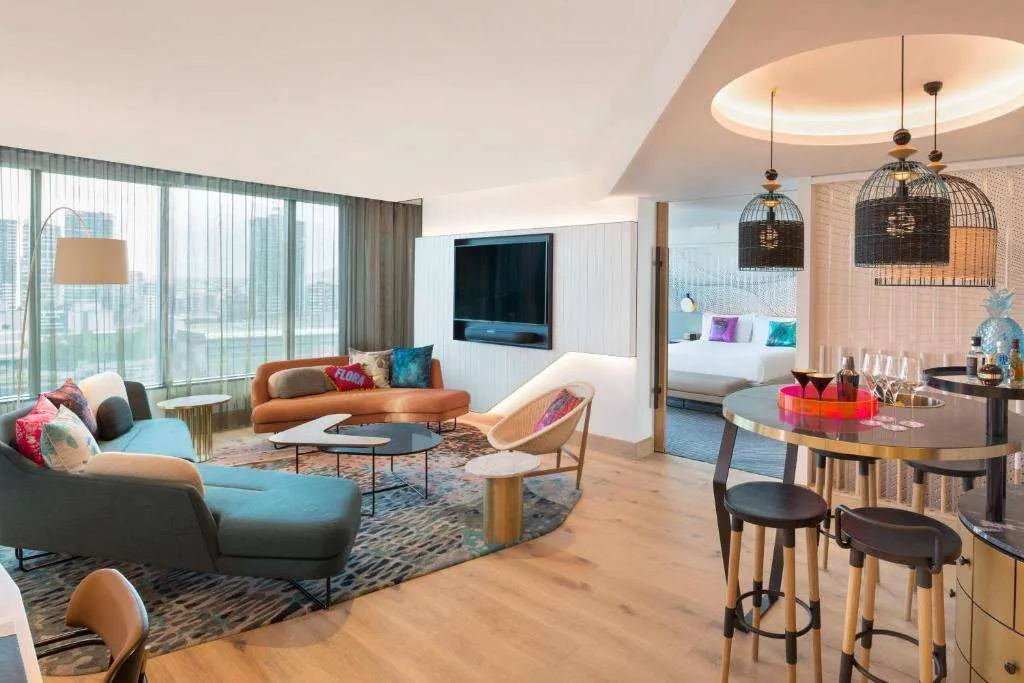
When high-performing remote professionals seek the best penthouse suites for digital nomads, they frequently encounter the “Luxury-Utility Gap.” This is the mistaken belief that high cost and extreme luxury correlate with professional functionality. In many cases, the most expensive suites focus entirely on the leisure experience—lavish decor, massive lounge areas, and high-tech entertainment systems—while completely ignoring the ergonomics of a professional workstation. The professional traveler who assumes that a suite with a grand dining table is a suite with a proper desk will quickly encounter the limitations of an environment designed for aesthetics over action.
A common pitfall involves the “Connectivity Assumption.” While a hotel or managed residence may offer “high-speed internet,” this metric is often entirely insufficient for someone running high-bandwidth remote operations, video conferences, or large data transfers. Furthermore, modern tower design—featuring extensive reinforced concrete and floor-to-ceiling metallic glass—can create significant RF shielding that degrades Wi-Fi performance in the interior of the unit. Identifying the best penthouse suites for digital nomads requires a diagnostic approach. One must verify the internal network infrastructure, the availability of hardwired Ethernet ports, and the ability to maintain a stable, air-gapped connection that does not rely on the building’s public guest network. True mastery involves looking past the marketing and assessing the suite’s infrastructure as a professional facility rather than just a place of residence.
Deep Contextual Background: The Evolution of the Vertical Workspace
The rise of the remote professional has forced a rapid evolution in how luxury properties manage space. A decade ago, a dedicated office in a residential unit was a rarity; today, it is becoming a baseline expectation for high-tier bookings. This shift occurred as properties recognized that the “work-from-anywhere” demographic possesses significant purchasing power and expects environments that accommodate their productivity requirements.
However, the rapid nature of this evolution has led to a lack of standardization. Many properties retrofitted existing spaces, often creating work zones that are poorly lit, improperly ventilated, or acoustically transparent. The history of this segment reveals a conflict between the architect’s vision of the penthouse as a space for retreat and the occupant’s requirement for it to be a space of intense labor. The current state of the industry is a transitional one, where only a select few properties have moved beyond the superficial provision of a table and chair to provide the deep infrastructure required by the modern professional.
Conceptual Frameworks for Asset Evaluation
To evaluate the operational quality of high-altitude workspaces, we utilize four mental models:
-
The Ergonomic-Neutrality Framework: Assess whether the workspace can be modified for individual physical needs. Does the unit offer height-adjustable furniture, proper task lighting, and chairs with lumbar support? A suite without these is a physical liability for the long-term worker.
-
The Network-Reliability Matrix: Categorize the suite’s digital infrastructure based on three factors: Bandwidth, Latency, and Physical Routing. The most secure environments offer hardwired, dedicated lines that avoid the congestion of the broader facility’s network.
-
The Acoustic-Privacy Threshold: Evaluate the suite based on its ability to isolate sound. A space that is open-concept and lacks acoustic treatment is a professional hazard for anyone who spends their day in high-stakes video meetings.
-
The Logistical-Throughput Model: High-performance work requires high-performance support. Can the property facilitate secure, timely deliveries for office equipment or technical documents, and does it respect the need for a quiet, undisturbed arrival and departure flow?
Key Categories and Operational Variations
| Category | Typical Professional Risk | Primary Asset Utility |
| The Managed Residence | Shared facility network bottlenecks | Professional support; ergonomic standardization |
| The Independent Villa-Style Penthouse | Maintenance lag; network isolation | Total control; high acoustic privacy |
| The Tech-Focused Urban Loft | High noise floor; urban congestion | Proximity to transit/infrastructure; high-speed fiber |
| The Resort-Based Crown Suite | Seasonal network instability | Biophilic design; focus-oriented atmosphere |
Decision Logic: When evaluating potential stays, prioritize the “IT-Transparency Test.” If the management or the booking agent cannot clearly explain the building’s network topology, you should treat the unit as a high-risk asset for professional operations.
Detailed Real-World Scenarios
-
The Global-Conference Challenge: The nomad requires consistent access to multiple time zones, necessitating high-speed, 24/7 connectivity. Decision: Filter options by their ability to provide an Uninterruptible Power Supply (UPS) and a dual-path ISP (primary and backup). A suite that cannot provide this level of redundancy is structurally incapable of supporting a high-stakes professional.
-
The Acoustic-Leakage Failure: A penthouse with expansive, open-concept design often creates significant echo, ruining the quality of professional audio. Decision: Bring modular acoustic paneling if the property is a long-term commitment. Alternatively, prioritize units with soft finishes, carpets, and divided zones that allow for the containment of sound. Second-order effect: This also improves the quality of the living environment beyond the workspace.
Planning, Cost, and Resource Dynamics
The economic profile of high-altitude remote work involves an upfront investment in logistical and technical due diligence. This investment pays off in the form of avoided project disruptions and significantly lower stress levels.
| Cost Component | Relative Impact | Variability |
| Network/IT Auditing | 30% | Fixed |
| Ergonomic Adaptation | 30% | High |
| Environmental/Logistical Support | 20% | Medium |
| Professional Backup Infrastructure | 20% | High |
Note: The cost of failing to audit a space is often measured in lost professional output and contract risk. When selecting the best penthouse suites for digital nomads, the “Complexity Premium” is simply the cost of doing high-level business from anywhere in the world.
The Risk Landscape and Systemic Failure Modes
Failure in high-altitude environments is almost always systemic rather than individual. A common failure is the reliance on a single, building-wide ISP that experiences outages when the tower’s broader network becomes congested during peak occupancy.
-
Environmental Instability: Climate-control systems in older or less-managed towers often fluctuate significantly. This is not just a comfort issue; a suite that is too hot or too cold is a suite that is physically impossible to inhabit for ten hours a day.
-
Support-Personnel Interference: High-end hospitality expects to service the room regularly. For the remote worker, this service is often a distraction. The best penthouse suites for digital nomads allow the occupant to toggle “Privacy-Only” modes, where service is performed at strictly defined, off-hours times.
Governance, Maintenance, and Long-Term Adaptation
To effectively manage the high-altitude remote workspace, one must adopt a proactive, layered governance model:
-
The Technical Walkthrough: Perform a speed and stability test upon check-in. Document the results and compare them against the property’s claims. If the results are poor, address the issue immediately.
-
Protocol-Based Interaction: Establish clear, written rules with the building’s concierge and housekeeping staff regarding your work schedule and the necessity for quiet periods.
-
Adaptive Response: Keep a “nomad’s kit”—portable Wi-Fi, high-quality audio hardware, and ergonomic supports—that can bridge the gaps in any property’s infrastructure.
Measurement, Tracking, and Evaluation
Evaluation should focus on the delta between the property’s claims and the actual experience:
-
Leading Indicators: Latency and packet-loss stats during business hours; frequency of building-wide network fluctuations; level of background noise during a standard conference call.
-
Lagging Indicators: Total time lost due to technical or logistical friction; the ease of returning to focus after a disturbance.
-
Qualitative Signals: The level of “operational friction” experienced during a typical workday. If the workspace feels like an afterthought, it will eventually become a liability to one’s performance.
Common Misconceptions and Oversimplifications
-
“High-floor units are inherently more peaceful.” Noise from urban density travels; elevation changes the type of noise, but it rarely eliminates it entirely.
-
“Smart technology provides a better work environment.” Without manual override, overly automated systems are a significant distraction.
-
“The best suite is the one with the best view.” A view is a luxury; a stable network and a proper chair are professional necessities.
-
“Concierge service is enough.” Personal service is not the same as professional support. Know the difference between the two.
Conclusion
Identifying the best penthouse suites for digital nomads is fundamentally a diagnostic exercise in professional logistics. It requires moving away from the aesthetic veneer of luxury into the operational heart of the property. The true apex of these environments is found where technical performance meets human-centric design. By focusing on the structural realities of vertical life and rejecting the superficial markers of prestige, one identifies suites that function as genuine, high-performance offices. The future of this market belongs to those who view their environment not as a trophy, but as a sophisticated, adaptable tool that one must manage with the same rigor as an industrial installation. In the final analysis, the value of an apex residential workspace lies in its ability to provide a consistent, high-functioning environment regardless of the external conditions. This proves that even at the highest level of luxury, the foundation—mechanical, logistical, and systemic—remains the only thing that matters for the long-term success of the professional traveler.