Best Penthouse Suites for Executives: A Diagnostic Framework
The executive penthouse occupies a unique intersection between architectural prestige and the apex of operational intensity. Often mischaracterized as mere trophy real estate, these spaces function as sophisticated, high-performance machines for living. To engage with these environments—which constitute some of the most complex residential footprints in the United States—is to move beyond the superficial allure of panoramic vistas. The true quality of an executive-grade asset is defined not by the view, but by the integrity of the building’s core systems, the autonomy of the unit, and the logistical precision of the service delivery.
For the corporate planner, the institutional investor, or the high-level professional seeking a master-class in high-end occupancy, the evaluation of such spaces requires a radical departure from standard hospitality metrics. One must look beyond the aesthetic veneer to examine the systemic, logistical, and structural realities that define the success of these units. In this environment, resilience—the capacity to remain serene and fully functional regardless of external conditions—is the ultimate luxury. We provide a rigorous framework for deconstructing the experience of apex accommodation, auditing the mechanical and service DNA that ensures an asset functions as a high-performance, secure residence.
Understanding “best penthouse suites for executives”
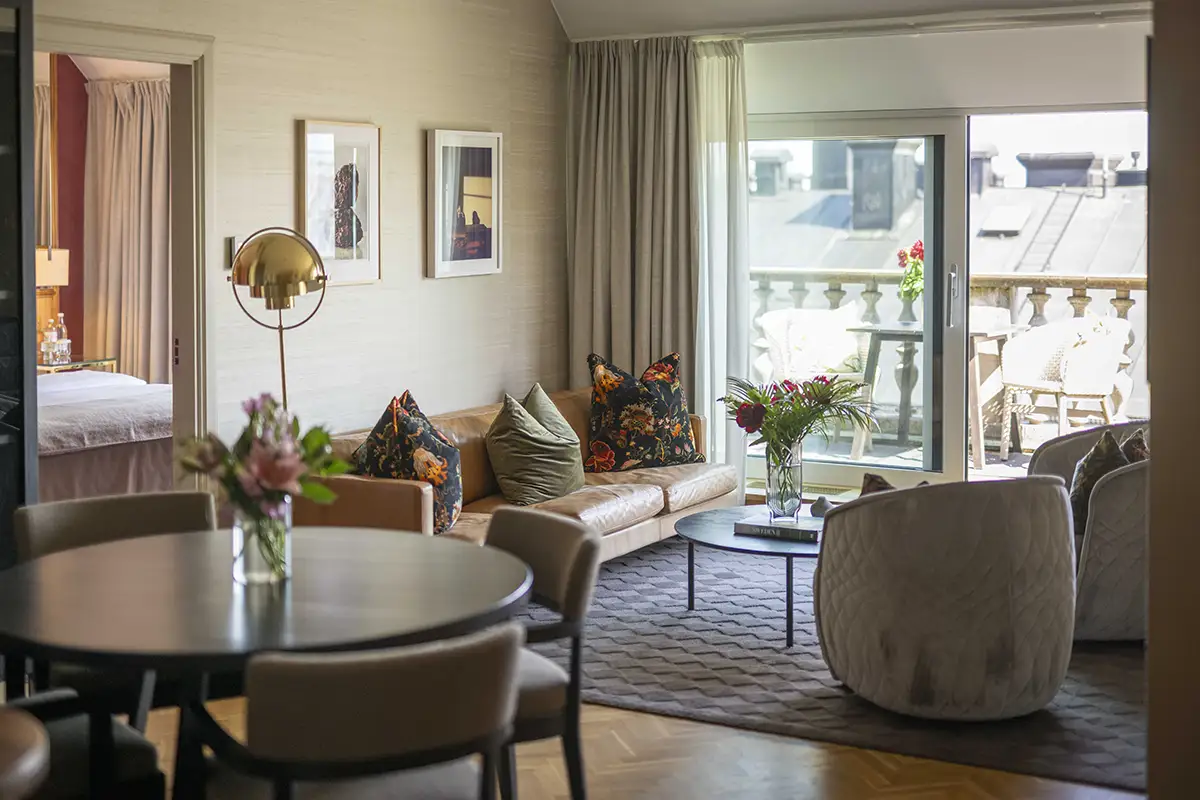
To investigate the best penthouse suites for executives requires one to acknowledge that the definition of “best” is inherently shifting. Most observers categorize these experiences based on brand reputation or aesthetic flair, which is a primary error. In the ultra-luxury sector, the most reliable proxy for a high-quality experience is the degree of operational decoupling the suite has achieved from the rest of the building. A penthouse that operates as an independent node—with its own HVAC climate-control loop, dedicated vertical transit, and specialized security architecture—will inevitably provide a superior, more predictable experience than a unit that relies on generic, building-wide service infrastructure.
Oversimplification, often driven by the media, presents a significant barrier to understanding. Planners who approach these assets as standard hotel inventory risk missing the nuances of facility integration. For instance, the experience of a top-tier stay is frequently compromised by logistical friction: the time spent waiting for a shared guest elevator, the inability of the building’s air-handling system to mitigate the thermal gain of high-altitude glass, or the lack of modularity in the unit’s utility controls. To curate the best penthouse suites for executives, one must adopt a diagnostic lens, assessing the building’s mechanical DNA to ensure that luxury is not just a visual layer, but an operational foundation.
Deep Contextual Background: The Evolution of Vertical Hospitality
The evolution of the penthouse in the United States has tracked the rapid densification of the urban core. Early 20th-century verticality was anchored in masonry, where the “penthouse” was a modest, secondary structure atop a stable, static building. The shift toward the modern super-tall structure has fundamentally altered this relationship. Today’s tower is a dynamic, swaying assembly, designed to dissipate massive aerodynamic loads. The executive occupant now lives at the center of this structural performance.
This systemic evolution has moved the burden of quality from the architect’s aesthetic choices to the engineer’s mechanical solutions. The most sophisticated experiences today are those that have successfully addressed the “stack effect”—the vertical movement of air within the tower—through pressurized lobbies and individual unit seals. Furthermore, the integration of smart-building technologies has transformed the penthouse into an adaptable, responsive environment. Recognizing this background is essential for any expert attempting to identify the best penthouse suites for executives, as it shifts the focus from decorating to infrastructure auditing.
Conceptual Frameworks for Asset Evaluation
To evaluate and compare the quality of these assets, we utilize three distinct mental models:
-
The Autonomy Model: How much does the unit rely on the building’s common systems? Units with independent climate control zones, localized water filtration, and secondary power backups are inherently more resilient. They minimize the risk of a building-wide system failure becoming a personal crisis.
-
The Circulation-Latency Framework: Costs and frustrations scale with time and distance. Every minute a staff member spends navigating a congested lobby or an inefficient lift bank is a cost passed to the occupant in the form of service lag. Choosing units with dedicated service bridges reduces this latency, directly impacting the quality of the stay.
-
The Technical Redundancy Audit: High-stakes business trips often collapse due to technical failures. A premium experience requires verified redundancy in core systems—power, connectivity, and environmental control—proactively avoiding the high-stakes stress of emergency repairs or service disruptions during peak occupancy.
Key Categories and Operational Variations
| Category | Typical Service Profile | Primary Operational Demand |
| The Full-Floor Pavilion | 24/7 Butler/Security | High-stakes presence; focused utility |
| The Vertical Duplex | Internal lift/service bridge | Logistical complexity; vertical integration |
| The Terrace-First Estate | Extreme seasonal exposure | Automated environmental controls |
| The Crown Unit | Premium-heavy/Iconicity | Duration-based negotiation; high throughput |
Decision Logic: When the time comes to define the best penthouse suites for executives, prioritize the “Service-to-Floorplate Ratio.” A unit with a massive floorplate that requires an army of staff members for basic maintenance will always be more prone to friction than a high-efficiency unit that utilizes smart-building technology to automate routine facility management.
Detailed Real-World Scenarios
-
The Multi-Day Corporate Summit: The requirement is seamless data security and the need for private, soundproofed meeting space. Decision: Prioritize properties that offer dedicated board-room wings within the suite architecture. Failure Mode: Inadequate local bandwidth or a failure to prevent external access to the meeting zone by building staff.
-
The High-Altitude Biophilic Retreat: The goal is connection to nature at extreme heights. Decision: Choose units with pre-integrated terrace irrigation and automated wind-shielding. Second-Order Effect: Without advanced automated maintenance, the plants succumb to high-velocity winds or extreme solar gain, resulting in a desolate terrace experience.
Planning, Cost, and Resource Dynamics
The economic profile of these elite stays involves significant variables. The “Complexity Premium” of managing a residence at extreme heights is often where the most significant failures occur if managed without rigor.
| Cost Component | Relative Impact | Variability |
| Facility Management (MEP) | 20% | Fixed |
| Logistical Service Fees | 35% | High |
| Security/Insurance Overlay | 25% | Medium |
| Energy/Environmental Control | 20% | High |
Note: The opportunity cost of space is critical. A penthouse with poorly utilized outdoor terrace square footage represents a significant, recurring loss of value. Optimizing how that space is integrated—or excluding it if it provides no mission-critical utility—is a vital step in maintaining the status of the best penthouse suites for executives.
The Risk Landscape and Systemic Failure Modes
Failure in high-altitude suite management is often compounding. A minor issue with climate control, for instance, leads to catastrophic service-staff overtime as they attempt to manually stabilize the environment.
-
Systemic Obsolescence: Smart-home systems that are deeply integrated become expensive liabilities. Prioritize units with modular hardware that allows for low-cost upgrades rather than total system replacements.
-
Thermal Inefficiency: Exterior seal failures at high elevations create significant energy losses. Proactive thermal imaging inspections prevent long-term spikes in utility costs and maintain the internal climate stability.
Governance, Maintenance, and Long-Term Adaptation
To maintain the standards of the best penthouse suites for executives, planners must adopt a proactive, layered governance structure:
-
Quarterly Diagnostic Cycles: Automated testing of HVAC, electrical redundancies, and leak-detection arrays.
-
Trigger-Based Audits: Establish clear thresholds for when to decommission a failing system rather than continuously repairing it.
-
Digital Twin Management: Maintain a comprehensive record of every system layout and repair to ensure future adaptations rely on precision rather than trial-and-error.
Measurement, Tracking, and Evaluation
Evaluation should focus on the delta between expected and actual performance:
-
Leading Indicators: Energy consumption per square foot, frequency of smart-system error codes, and service response time logs.
-
Lagging Indicators: Total expenditure per occupancy day relative to industry benchmarks for similar-tier assets.
-
Qualitative Signals: Client feedback regarding the frictionlessness of the stay, which correlates strongly with the efficiency of the underlying operational systems.
Common Misconceptions and Oversimplifications
-
“High ceilings are always superior.” Excessive volume creates expensive climate-control demands. The most efficient spaces use volume selectively.
-
“Penthouse living is naturally quiet.” High-altitude winds create unique acoustic signatures that require expensive remediation if not considered during the building design.
-
“Smart homes save energy.” Without expert tuning, an over-automated home is often less efficient than a simple, manual one.
-
“Negotiation is the only path to value.” Operational streamlining, not negotiation, provides the largest and most sustainable gains in quality.
Conclusion
The effort to identify the best penthouse suites for executives is essentially an inquiry into the intersection of architectural beauty and operational rigor. The true apex of elite accommodation is found where technical performance meets human-centric comfort. By focusing on the structural realities of vertical habitation and rejecting superficial markers of status, one can identify residences that serve as high-performance, resilient assets. The future of this market belongs to those who view the suite not as a trophy, but as a sophisticated, adaptable system that evolves alongside the requirements of the occupants. In the final analysis, the value of the best penthouse suites for executives lies in the ability to provide a consistent, high-functioning environment regardless of external conditions, proving that even at the highest level, a disciplined, data-driven approach to facility operations is the foundation of long-term economic and experiential sustainability.