Best Secluded Penthouse Suites United States: An Operational Audit
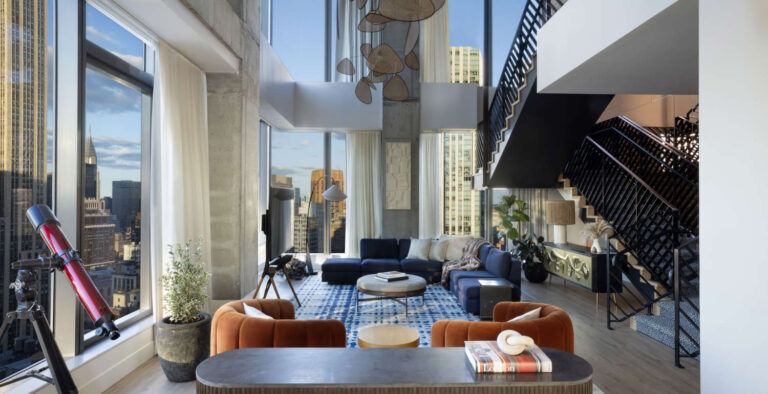
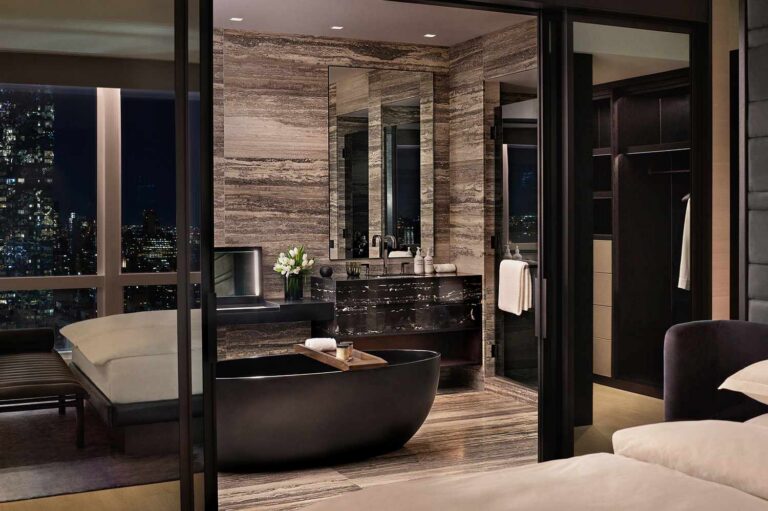
The concept of seclusion in an era of hyper-connectivity represents a significant shift in the luxury residential market. When travelers seek the best secluded penthouse suites united states venues have to offer, they are not merely looking for a high floor or a prominent address. They are pursuing a logistical and structural environment where the urban density of a metropolitan area is effectively neutralized. True seclusion at the penthouse level involves the creation of a private, atmospheric island that sits above the noise, yet remains functionally tied to the essential services of a sophisticated host property.
This pursuit is rarely as straightforward as marketing imagery suggests. A suite located on the highest floor of a building may offer a commanding view, but if it suffers from shared elevator banks, audible proximity to neighbors, or an inability to control the environmental threshold of the unit, it fails the definition of seclusion. Achieving this state requires an integration of physical, mechanical, and logistical safeguards. The resident must be shielded from the transit patterns of the building’s broader population, the mechanical resonance of the structure, and even the visual intrusion of adjacent towers.
The following audit explores the technical foundations of these high-altitude sanctuaries. We move past the superficial gloss of high-end travel brochures to deconstruct the engineering of privacy. By analyzing the structural realities of sound isolation, the complexity of secure access, and the governance models that sustain these environments, we establish a criteria for identifying properties that function as legitimate, high-performance retreats. This analysis provides a definitive reference for those who demand institutional-grade privacy at the vertical limits of American real estate.
Understanding “best secluded penthouse suites united states”
When affluent travelers begin to research the best secluded penthouse suites united states offerings, they often encounter the “Proximity Paradox.” This is the mistaken belief that luxury properties in major city centers are inherently noisy or public. In reality, the most successful high-altitude retreats are located in precisely these high-density nodes. The success of these units lies in their “service-siloing.” A property that maintains a distinct, staff-only service corridor that never intersects with the guest’s primary arrival or departure path creates an experience of seclusion that is often superior to a remote, stand-alone villa.
Another common pitfall involves the “Glass-Wall Fallacy.” Many individuals assume that floor-to-ceiling windows, while aesthetically striking, are inherently incompatible with privacy. Modern engineering has corrected this through the use of high-performance, one-way glazing and computerized smart-glass, which can transition from transparency to complete opacity at the touch of a button. However, the best secluded penthouse suites united states market currently prizes a more mechanical approach to this: the physical orientation of the suite away from neighboring sightlines. Identifying the premier options requires an investigation into the unit’s specific building-stack placement. If the penthouse shares a floorplate with another residential or commercial unit, its privacy potential is immediately capped. True seclusion requires a full-floor or multi-floor footprint where the only neighbors are the mechanical systems of the building itself.
Deep Contextual Background: The Evolution of the Vertical Retreat
The development of the secluded penthouse in America was an evolutionary response to the overcrowding of the urban core. Throughout the 20th century, the luxury residence became increasingly exposed to the bustle of the city. Architects and developers recognized that a significant segment of the market would pay a substantial premium for “vertical distance.” This distance is not measured in feet, but in the complexity of the layers required to reach the residence.
As modern skyscrapers transitioned into “pencil towers,” the penthouse evolved from a simple unit atop an office building to a sophisticated, independent vertical estate. The engineering of these modern landmarks incorporates specialized damper systems that prevent the building from swaying, which was a historic inhibitor to true vertical comfort. Today, these residences act as hardened, climate-controlled, and acoustically insulated capsules. They are designed to allow the occupant to monitor the city below while remaining completely detached from its kinetic energy. This evolution has redefined the standard for elite residential living.
Conceptual Frameworks for Asset Evaluation
To evaluate the degree of seclusion in these environments, we utilize four mental models:
-
The Logistical-Friction Index: Measure the total number of “public interfaces” a resident must pass through to reach their unit. A world-class secluded penthouse requires no more than two: the building entrance and the private elevator lobby.
-
The Acoustic-Decoupling Audit: Determine if the penthouse is mechanically separated from the building’s structural core. If you can hear the rumble of an elevator or the hum of a ventilation shaft, the unit is not secluded; it is merely elevated.
-
The Sightline-Integrity Framework: Analyze the surrounding skyline for future development. A penthouse that relies on a specific view for its privacy is a high-risk asset, as neighboring towers can—and eventually will—compromise that visibility.
-
The Service-Independence Model: Assess whether the unit relies on the broader building’s common areas for services like laundry, catering, or maintenance. A suite that functions with total self-containment is the gold standard of privacy.
Key Categories and Operational Variations
| Category | Typical Mechanical Risk | Primary Asset Utility |
| The Full-Floor Sky Tower | Sway-dampening requirements | Total horizontal privacy |
| The Historic Conversion | Thermal/Acoustic leakage | Unique narrative provenance |
| The Estate-Style Pavilion | Extreme thermal bridging | Unmatched floor-to-ceiling volume |
| The Managed-Boutique Suite | Service-staff density | High-touch, silent logistical support |
Decision Logic: When auditing the best secluded penthouse suites united states market, always filter by the “private elevator code.” If the elevator requires the resident to stop at a common lobby or floor before reaching the penthouse, the seclusion is compromised.
Detailed Real-World Scenarios
-
The Sightline Compromise: A penthouse is built with full privacy, but a new tower is approved for construction adjacent to the property. Decision: Always audit the municipal land-use and zoning filings for the surrounding three blocks before committing to a stay or acquisition. Second-order effect: This prevents the loss of the “secluded view,” which is often a key component of the suite’s valuation.
-
The Mechanical-Resonance Issue: A penthouse is located directly beneath the cooling towers on the roof. Decision: Reject any suite that shares a structural member with the building’s HVAC infrastructure. The vibration from these systems is often imperceptible at first but becomes a constant, fatiguing presence during long-term occupancy.
Planning, Cost, and Resource Dynamics
The economic profile of these retreats involves high “privacy-maintenance” costs. These are not standard operating expenses.
| Cost Component | Relative Impact | Variability |
| Acoustic-Barrier Engineering | 35% | High |
| Dedicated Security Staffing | 30% | Medium |
| Specialized Climate Control | 20% | High |
| Legal/Zoning Due Diligence | 15% | Low |
Note: The best secluded penthouse suites united states collectors know that the real expense is not the suite itself, but the ongoing cost of the professional management team required to keep it truly private and isolated from the rest of the facility.
The Risk Landscape and Systemic Failure Modes
Failure in these environments often stems from “Creeping Connectivity.” This is when a property management firm begins to introduce shared services into a previously siloed penthouse, thereby inviting the public into the private sphere.
-
Credential Bloat: Management issues master keys to too many staff members, destroying the premise of a “secluded” retreat.
-
The HVAC-Link Trap: Systems that share air or water loops with lower floors provide a path for odor, noise, and pollutants to reach the penthouse. A secluded unit must have its own independent, closed-loop mechanical system.
Governance, Maintenance, and Long-Term Adaptation
To protect the seclusion of these assets, owners must adopt a layered governance model:
-
The Annual Security Audit: A third-party firm should test the suite’s physical and digital security protocols, including its access logs and visual-privacy barriers.
-
Protocol-Hardening: Establish a “zero-entry” policy for all non-essential staff, where maintenance or service is only permitted during designated, pre-approved windows.
-
Systemic Replacement Cycles: Decommission and replace mechanical systems before they reach their failure threshold, as a breakdown in a penthouse often requires the heavy-duty machinery of the building to be accessed, which is the antithesis of seclusion.
Measurement, Tracking, and Evaluation
Evaluation should focus on the “operational signature” of the suite:
-
Leading Indicators: Response time for private-access elevators; frequency of unannounced staff arrivals; background ambient-decibel levels in the master bedroom.
-
Lagging Indicators: Total time lost to managing logistical friction with the host facility; the number of incidents where external actors intruded on the suite’s private space.
-
Qualitative Signals: The occupant’s sense of “total detachment.” When you reach the unit, does the city’s presence vanish? The best secluded penthouse suites united states visitors seek should provide this feeling of total vertical displacement.
Common Misconceptions and Oversimplifications
-
“High-floor units are always quiet.” Elevation changes the pitch of city noise, but it does not eliminate it if the glazing is poor.
-
“Smart technology equals privacy.” Often, the opposite is true. Over-automation provides more points of failure for digital intrusion.
-
“A secluded unit needs to be empty.” True seclusion is about managed access, not a lack of activity.
-
“Views define the price.” Seclusion and silence are far more valuable than a wide-angle view of the urban grid.
Conclusion
The search for the best secluded penthouse suites united states travelers desire is an exercise in discerning the difference between aesthetic luxury and operational isolation. The most significant residences are those that have been engineered to function as autonomous islands within the dense fabric of the American city. By focusing on mechanical independence, structural sound-dampening, and rigorous governance of access, one identifies properties that provide the rarest of urban commodities: the ability to exist completely removed from the city while sitting at its very summit. Ultimately, the value of these retreats lies in their ability to preserve the occupant’s time and peace, which are the most finite resources of all.