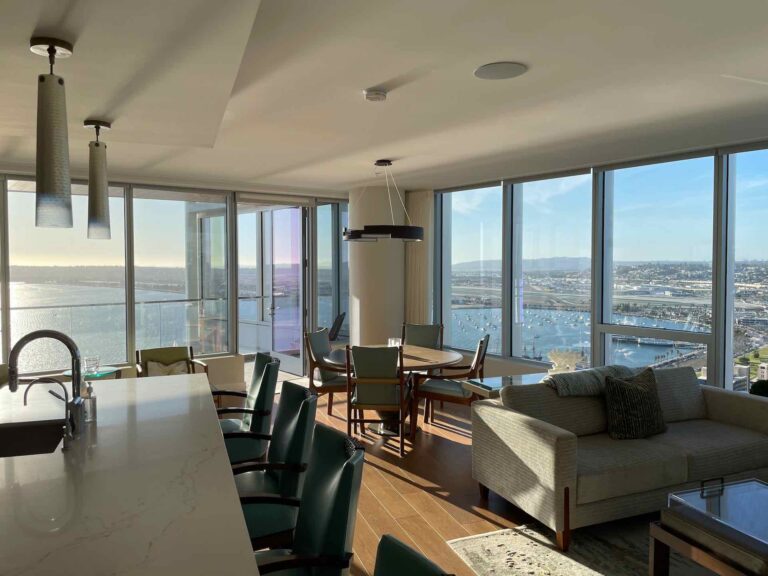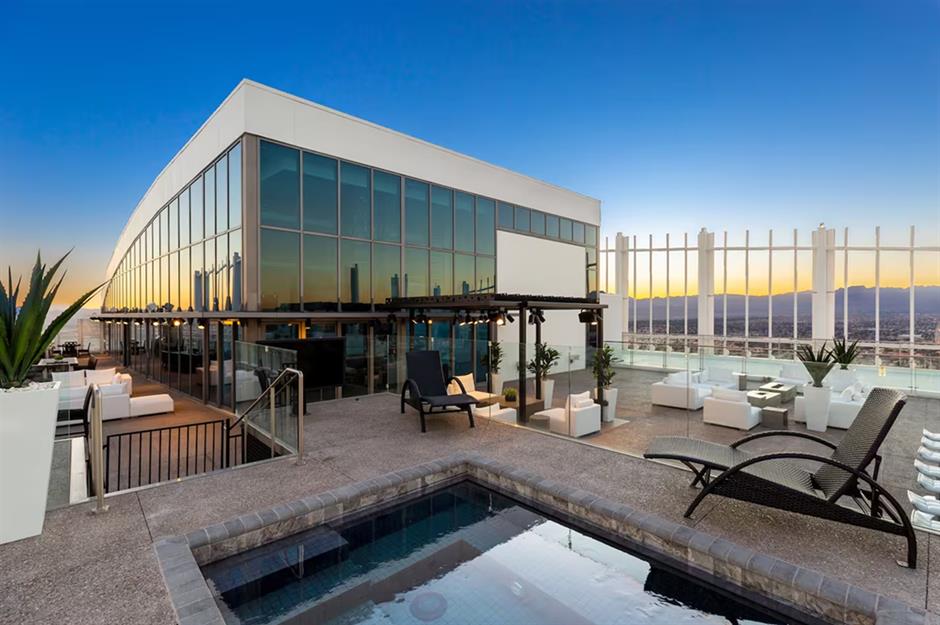
American Urban Penthouse Destinations USA: A Strategic Asset Audit
The contemporary American penthouse functions as far more than a mere elevated residence. It serves as a highly specialized, integrated node within the urban core, bridging the gap between domestic habitability and industrial-grade logistical performance. To engage with these spaces is to interact with a dynamic, swaying assembly, where the primary challenge lies not in the luxury of the vista, but in the structural and mechanical stability required to maintain it. As urban densification continues to reshape our skyline, the penthouse has evolved into an essential, albeit complex, component of the city’s vertical infrastructure.
Observers often reduce the high-altitude experience to aesthetic markers, such as floor-to-ceiling glass or private terrace access. While these features define the market’s visual appeal, they frequently obscure the reality of vertical life. A skyscraper is not a static pedestal; it is an active, swaying structure designed to dissipate massive aerodynamic and seismic forces. Consequently, the occupant must treat their home as a living machine. Success in this domain relies on a transition from passive consumption to active asset management, where environmental calibration, security, and logistical throughput are monitored with surgical precision.
This analysis provides a comprehensive audit of high-altitude residential life. We move past the traditional narratives of luxury to address the engineering, fiscal, and operational realities that define the sector. By deconstructing systemic vulnerabilities and opportunities, we establish a robust framework for owners and facility managers. The focus remains on resilience, utility, and long-term viability, providing a definitive reference for those seeking to master the complexities of vertical existence in the modern era.
Understanding “american urban penthouse destinations usa”
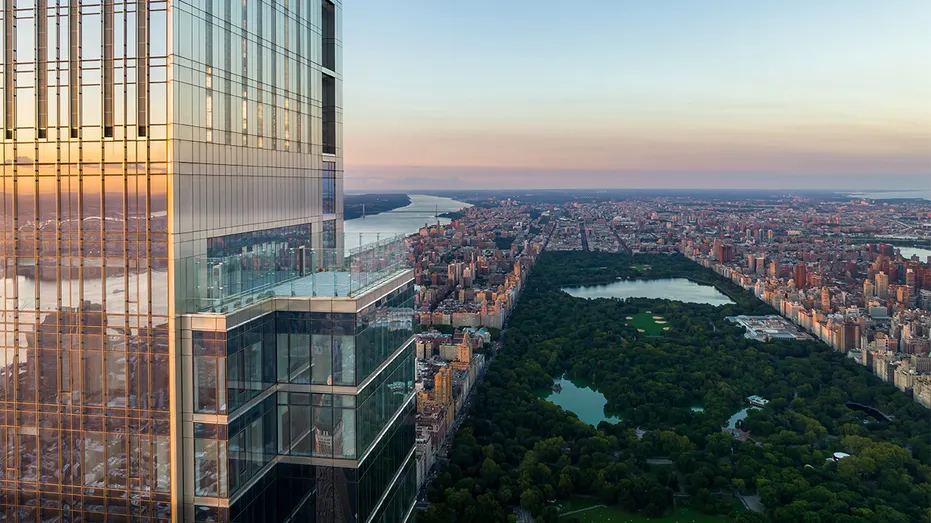
When industry professionals analyze american urban penthouse destinations usa, they frequently encounter the “Prestige Paradox.” This phenomenon occurs when the perceived value of an asset—driven by its visibility—is inverse to its actual operational reliability. Many occupants prioritize the aesthetic narrative of their high-altitude residence, ignoring the underlying mechanical grid that supports their living conditions. True mastery of this lifestyle requires a deliberate decoupling of ego from asset. One must recognize that the penthouse is a complex industrial utility requiring constant tuning.
Furthermore, the experience of these locations is often mischaracterized as a static, unchanging existence. In reality, it is a high-frequency environment requiring dynamic adjustment. The external climate at eighty stories differs vastly from the street level, characterized by higher wind speeds, extreme temperature fluctuations, and unique humidity profiles. Occupants who treat their homes as static boxes invariably face mechanical failures, energy waste, and long-term degradation of interior finishes. Therefore, the successful resident embraces an auditing approach. They monitor the structural health of the building envelope, track the performance of independent climate systems, and audit the throughput of the building’s service elevators with the same intensity applied to financial portfolios.
Deep Contextual Background: The Evolution of Vertical Hospitality
The American high-altitude residence emerged from a convergence of industrial ingenuity and urban demand. In the late 19th century, the advent of the safety elevator and the load-bearing steel frame permitted cities to grow upward rather than outward. Initially, the highest floors remained undesirable, primarily due to the difficulty of pumping water and the lack of reliable transit. However, as infrastructure matured, the perception shifted. The penthouse became a synonym for the pinnacle of urban success.
Throughout the 20th century, these assets evolved from peripheral roof structures into the primary real estate anchors of the super-tall tower. This evolution necessitated the invention of complex, internal climate management and structural damping systems. We now live in an era where the building itself acts as a massive, intelligent vessel. The modern inhabitant must navigate this intelligence, understanding that their living space is a component of a larger, interconnected smart-grid. Understanding the historical progression of these spaces is essential for those who wish to optimize their own high-altitude existence today.
Conceptual Frameworks for Asset Evaluation
To audit the performance of these residential assets, we utilize three mental models:
-
The Systemic Decoupling Model: Assess the degree of independence the unit holds from the building’s primary infrastructure. High-performing assets possess localized redundancies—such as independent climate loops and private water filtration—that insulate the occupant from central system failures.
-
The Operational Latency Index: Every minute an occupant spends waiting for a delivery, a maintenance team, or security clearance represents a degradation of their time. We rank assets by the efficiency of their “logistical conduit”—the speed and exclusivity of their vertical transit access.
-
The Envelope Integrity Audit: The building envelope is the primary line of defense against the extreme atmospheric pressure of the crown. We evaluate the frequency and methodology of seal inspections, as small envelope breaches create compounding energy costs and structural humidity risks.
Key Categories and Operational Variations
| Category | Typical Mechanical Risk | Primary Asset Utility |
| The Historic Conversion | Complex MEP/Structural legacy | Unique narrative; character-rich floorplates |
| The New-Build Boutique | Systemic complexity/High density | Modern thermal efficiency; digital integration |
| The Mixed-Use “Crown” | Access logistics/Throughput demand | Centralized service; multi-tiered security |
| The Industrial Loft | Envelope aging; heat retention | Unmatched floor-to-ceiling scale |
Decision Logic: When auditing american urban penthouse destinations usa for long-term value, prioritize the “Service-to-Floorplate Ratio.” Assets that rely on a disproportionately large service staff to function are often more vulnerable to operational variance than those designed for automation.
Detailed Real-World Scenarios
-
The Atmospheric Pressure Challenge: At high elevations, the “stack effect” drives air up shafts, causing temperature fluctuations. Decision: Utilize an independent, air-gapped climate management system for the unit. Second-order effect: This prevents the common issue of uncontrolled drafts in the foyer, which plagues many standard high-altitude designs.
-
The Wind-Harmonic Management: Super-tall towers naturally sway to dissipate wind. Decision: Choose units that utilize integrated, active Tuned Mass Dampers (TMDs). Failure to prioritize this results in long-term micro-cracking of stone finishes and glass seals, leading to costly, recurring repairs.
Planning, Cost, and Resource Dynamics
The economic profile of high-altitude living is defined by high upfront capital requirements and non-linear operational costs. The “Complexity Premium” is the deciding factor in fiscal health.
| Cost Component | Relative Impact | Variability |
| MEP/Infrastructure Maintenance | 35% | Fixed |
| Vertical Logistics/Labor | 25% | High |
| Envelope/Facade Preservation | 25% | Medium |
| Resilience/Backup Systems | 15% | High |
Note: Owners often overlook the opportunity cost of under-utilized terrace space. These areas require significant capital for upkeep and often provide no operational utility if not specifically programmed for use.
The Risk Landscape and Systemic Failure Modes
Failure in these environments is often compounding. A minor issue in climate control leads to catastrophic energy spikes as the system works to compensate for an envelope breach.
-
Digital Fragility: Complex integrated systems become liabilities if they are not modular. Prioritize environments that allow for component-level upgrades rather than total system replacements, which are often logistically impossible in a high-density tower.
-
Thermal Fatigue: The expansion and contraction of building materials at height lead to inevitable seal failures. If not addressed by a rigid, quarterly inspection schedule, these failures compromise the interior atmosphere and lead to permanent damage.
Governance, Maintenance, and Long-Term Adaptation
To effectively manage the complexities of these residences, planners must adopt a proactive, layered governance model:
-
Quarterly Diagnostic Cycles: Automated, non-destructive testing of HVAC loops, electrical redundancies, and leak-detection arrays.
-
Trigger-Based Audits: Establish clear thresholds for when to decommission a failing system rather than continuously patching it. A rule of thumb is to replace systems if maintenance costs exceed 20% of replacement value within a single cycle.
-
Digital Twin Management: Maintain a comprehensive record of every system layout and repair. Future adaptations rely on precision data, not guesswork.
Measurement, Tracking, and Evaluation
Evaluation should focus on the delta between expected and actual performance:
-
Leading Indicators: Energy consumption per cubic foot, frequency of sensor-based error codes, and service response time for mechanical issues.
-
Lagging Indicators: Total maintenance expenditure relative to industry benchmarks for similar-tier, high-altitude assets.
-
Qualitative Signals: User feedback regarding the “frictionlessness” of the transit from the lobby to the unit, which correlates strongly with the efficiency of the underlying mechanical and logistical systems.
Common Misconceptions and Oversimplifications
-
“High-floor units are inherently better.” Elevation increases structural risk. The most stable units prioritize the building core over the perimeter.
-
“Buildings are static structures.” Towers are dynamic systems; this movement must be accounted for in the structural integrity of the finishes.
-
“Smart technology equals efficiency.” Without manual override capabilities, over-automation in high-altitude environments is a major risk factor.
-
“Lifestyle is a visual experience.” Visuals are marketing; operational uptime is the only metric that matters for a long-term asset.
Conclusion
Mastering the landscape of american urban penthouse destinations usa is fundamentally a diagnostic exercise. It requires moving away from the aesthetic veneer of luxury into the mechanical heart of the skyscraper. The true apex of these environments is found where technical performance meets human-centric vigilance. By focusing on the structural realities of vertical life and rejecting superficial markers of prestige, one identifies residences that serve as high-performance, resilient assets. The future of this market belongs to those who view the residence not as a trophy, but as a sophisticated, adaptable system that must be managed with the same rigor as an industrial installation. In the final analysis, the value of an apex residential asset lies in its ability to provide a consistent, high-functioning environment regardless of external conditions, proving that even at the highest level, the foundation—mechanical, logistical, and systemic—is everything.