How to Manage Penthouse Suites Elevator Delays: A Strategic Operational Audit
In the architecture of the modern super-tall tower, the elevator is not merely a convenience; it is the structural and logistical lifeline of the entire asset. For the penthouse occupant, the quality of vertical transit dictates the perceived value of the residence. When that lifeline experiences latency—what users perceive as a delay—the entire ecosystem of luxury service, security, and convenience begins to degrade. Managing this throughput is the primary challenge for building managers and the silent requirement for high-end residential stability.
Vertical transit in high-density, multi-use skyscrapers functions as a complex, dynamic system of queues, demand forecasting, and mechanical state management. A delay is rarely the result of a single mechanical failure; it is typically a cascading outcome of sub-optimal dispatching algorithms, occupant demand spikes, or the competing priorities of commercial, residential, and service traffic. To master this environment, one must move past the frustration of the wait and into a technical understanding of the mechanical and digital logic governing the shafts.
This analysis serves as an exhaustive audit for facility managers, owners, and building governance boards regarding the mitigation of transit latency. By deconstructing the systemic failures that lead to congestion, we establish a rigorous framework for optimizing the logistical conduits that serve the penthouse level. The focus is on long-term systemic resilience, technical foresight, and the harmonization of building usage patterns, ensuring that the vertical experience remains seamless even in the most demanding urban environments.
Understanding “how to manage penthouse suites elevator delays”
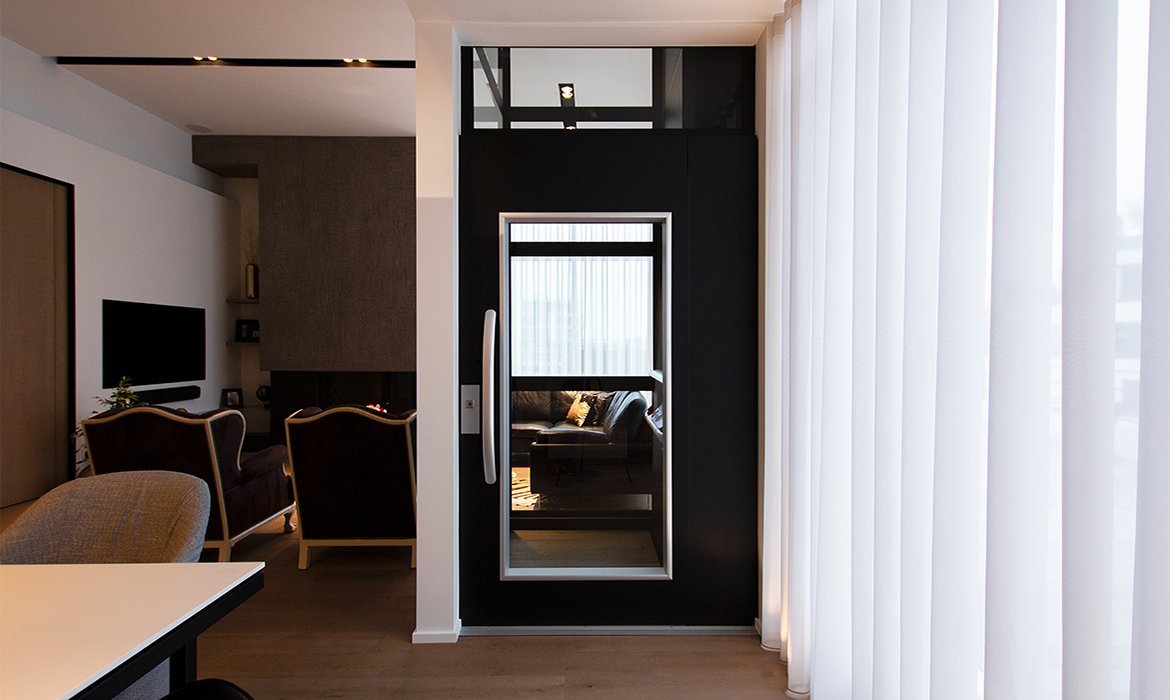
When stakeholders seek to understand how to manage penthouse suites elevator delays, they often focus on the wrong variable: the speed of the car. In reality, the velocity of the cab is largely irrelevant compared to the “dwell time” and the “dispatch logic.” A delay occurs when the dispatching system fails to anticipate demand, resulting in cars remaining occupied or stationary for cycles beyond the threshold of human patience. Oversimplification in this sector leads to the “Brute Force Fallacy”—the belief that installing faster motors or adding more cars will solve congestion. This rarely works, as adding cars without optimizing the dispatching algorithms often increases mechanical complexity and congestion within the hoistway.
A critical misunderstanding involves the segregation of traffic. The most robust buildings in terms of logistical performance do not attempt to force penthouse traffic into the same shared logic as lower-floor residential or commercial traffic. Instead, they treat the penthouse as a separate logistical zone. When addressing how to manage penthouse suites elevator delays, one must first audit the building’s zoning architecture. Is there a dedicated bank? Is the service lift integrated with the passenger lift during peak hours? Addressing these structural questions is the prerequisite for any software-based optimization. True mastery requires a holistic, diagnostic approach, evaluating the interaction between human behavior and the mechanical system’s constraints.
Deep Contextual Background: The Evolution of Vertical Transit
The history of the skyscraper is effectively the history of the elevator. With the development of the safety elevator in the mid-19th century, the structural vertical limit of architecture was broken. However, the subsequent century was defined by the struggle to move people efficiently. Early systems were manual, requiring an operator to interpret the needs of the building. As buildings increased in height, the complexity of movement scaled non-linearly.
The current era, characterized by AI-driven destination control systems (DCS), represents a shift from mechanical to data-driven transit. These systems now analyze the historical usage of a building to predict peak arrival and departure times, pre-positioning cars to meet demand before a user ever presses a button. Understanding the evolution of these systems is crucial when learning how to manage penthouse suites elevator delays, as it highlights that the failure is often not the equipment itself, but the data models that govern it. The integration of building management systems (BMS) with transit logic represents the next frontier in minimizing latency.
Conceptual Frameworks for Asset Evaluation
To audit transit latency, we utilize three mental models:
-
The Demand/Supply Divergence Model: Identify periods where demand for transit spikes beyond the capacity of the current dispatch logic. By mapping the divergence, managers can implement “pre-positioning” protocols during expected peak windows.
-
The Throughput-Latency Ratio: Evaluate the building not by how fast it moves people, but by how many people it can move per minute (PPM) at a specific latency threshold. A high-performance tower maintains a PPM that accounts for the “maximum load event”—such as a private event or high-traffic holiday.
-
The Service-Infrastructure Decoupling Framework: A primary cause of delays is the competition between passenger traffic and back-of-house logistics (waste removal, deliveries, security). High-performance buildings mandate the total decoupling of these flows to protect the passenger transit experience.
Key Categories and Operational Variations
| Category | Operational Profile | Transit Strategy |
| The Dedicated Bank | High exclusivity/High performance | Direct hoistway control; minimal stopping |
| The Destination-Control Model | AI-driven/Adaptive | Algorithmic pre-positioning; group zoning |
| The Mixed-Use Shared Bank | High traffic/Diverse demand | Strictly prioritized service zones |
| The Penthouse-Service Hybrid | Logistical/Residential overlap | Time-locked lift access; secure staging |
Decision Logic: When evaluating how to manage penthouse suites elevator delays, start with the “Inter-Zone Interference” test. If your penthouse lift stops on intermediate floors, your logistical foundation is flawed. The goal is to move from “stopping-based transit” to “dedicated transit.”
Detailed Real-World Scenarios
-
The Peak-Load Event: A residence hosts a private gathering, leading to a massive spike in inbound traffic. Decision: Implement a “temporary group zoning” override in the BMS, temporarily designating two cars exclusively to the penthouse bank. Failure to do so results in significant service staff churn, as they are unable to maintain the residence effectively.
-
The Mechanical/Service Conflict: Waste removal occurs during prime resident arrival hours. Decision: Create a “hard-lock” schedule in the building’s logistical software that prohibits service-lift usage by non-resident staff during identified high-traffic windows. Second-order effect: This ensures consistent resident arrival times and increases the efficiency of the service staff by preventing transit delays.
Planning, Cost, and Resource Dynamics
The economic impact of transit delays is felt in property value erosion and operational labor costs. Efficient transit is a high-yield investment.
| Cost Component | Relative Impact | Variability |
| DCS System Upgrades | 30% | Fixed |
| Logistical Protocol Design | 25% | Medium |
| Facility Management Training | 20% | Low |
| Emergency Redundancy | 25% | High |
Note: The cost of downtime is exponential. If an elevator bank requires a mechanical overhaul, the cost of temporary lift-sharing arrangements often exceeds the investment in predictive, sensor-based maintenance technologies.
The Risk Landscape and Systemic Failure Modes
Systemic failure in vertical transit is rarely the failure of the car itself. It is a failure of communication between the car, the call-button array, and the building’s brain.
-
Cyber-Logistical Fragility: Modern DCS platforms are networked devices. A security breach in the building’s internal network can cause transit protocols to revert to default, low-efficiency settings.
-
Sensor Saturation: Too many motion sensors in the lobbies can cause “ghost calls,” where the system believes a resident is waiting and sends an elevator that is not needed, wasting energy and transit capacity.
Governance, Maintenance, and Long-Term Adaptation
Building managers must treat transit governance as a dynamic, evolving discipline:
-
The Monthly Logistical Review: Audit call-response logs to identify “latency clusters”—specific times and days where transit times exceed standard thresholds.
-
Adjustment Triggers: Define the precise metrics that demand a system re-configuration. If wait times exceed 45 seconds for more than 5% of the monthly traffic, an immediate audit of the dispatch logic is required.
-
The Layered Checklist: Establish a routine for checking the calibration of weight sensors and lobby presence sensors, which are the primary inputs for all transit decisions.
Measurement, Tracking, and Evaluation
Evaluation requires granular, event-based data:
-
Leading Indicators: The variance between predicted car-arrival and actual car-arrival; frequency of “unproductive” trips (cars arriving with no passenger).
-
Lagging Indicators: Total time lost per month due to transit latency across the penthouse-accessible banks.
-
Qualitative Signals: User feedback regarding the feeling of “flow” rather than “resistance” when moving through the building.
Common Misconceptions and Oversimplifications
-
“Adding more cars solves delays.” In most high-rise scenarios, adding more cars without improving the dispatch logic only increases the average latency by creating congestion in the shafts.
-
“Penthouse occupants should just wait.” Service expectations in high-end residential assets are absolute; latency is a measurable failure of the asset’s utility.
-
“Maintenance is a reactive process.” Preventive, sensor-based maintenance is the only way to avoid the catastrophic failures that lead to extended system downtime.
-
“The elevator is a separate system.” Modern vertical transit is an integral component of the building’s BMS; it must be audited and managed in concert with the HVAC and security systems.
Conclusion
Understanding how to manage penthouse suites elevator delays is fundamentally about understanding the building as a living, breathing logistical entity. It is a discipline of data, timing, and structural prioritization. By prioritizing the decoupling of traffic, implementing adaptive dispatch logic, and maintaining the mechanical health of the system, managers can eliminate the latency that plagues so many high-rise assets. The future of residential value in the urban core belongs to those who view the transit experience as a key performance indicator. When vertical movement is perfected, it ceases to be a feature of the building and becomes a seamless extension of the residence itself. True excellence in this domain is invisible, quiet, and consistently efficient.