Common Penthouse Suites Booking Mistakes: A Strategic Asset Audit
The penthouse suite occupies a unique position within the luxury hospitality and residential market. It is not merely a room or a residence; it is a high-performance venue, integrated into the mechanical and logistical framework of a super-tall skyscraper. To book such an asset successfully requires more than the simple exchange of capital for access. It demands a diagnostic understanding of how a high-altitude structure functions, how its service layers interlock, and where the potential for operational failure resides. A penthouse is a system in constant motion, subject to aerodynamic, thermal, and mechanical pressures that are entirely absent at the street level.
Inexperienced travelers and professional event planners often approach these assets with a “static” mindset. They assume that the prestige of the address guarantees a consistent experience. This is a fundamental oversight. The quality of a penthouse stay or event is dictated by the efficiency of the building’s backend operations—vertical transit, localized environmental control, and security throughput. When these systems are not vetted during the booking process, even the most visually stunning property can fail to provide the functional utility expected of an apex asset.
This analysis provides a definitive roadmap for stakeholders tasked with navigating the high-stakes world of elite bookings. We deconstruct the systemic realities of these environments, moving past marketing gloss to address the operational nuances that truly define value. By auditing the common pitfalls in the booking lifecycle, we establish a rigorous framework for identifying assets that offer genuine performance and resilience, ensuring that the selection process is backed by technical foresight rather than passive assumption.
Understanding “common penthouse suites booking mistakes”
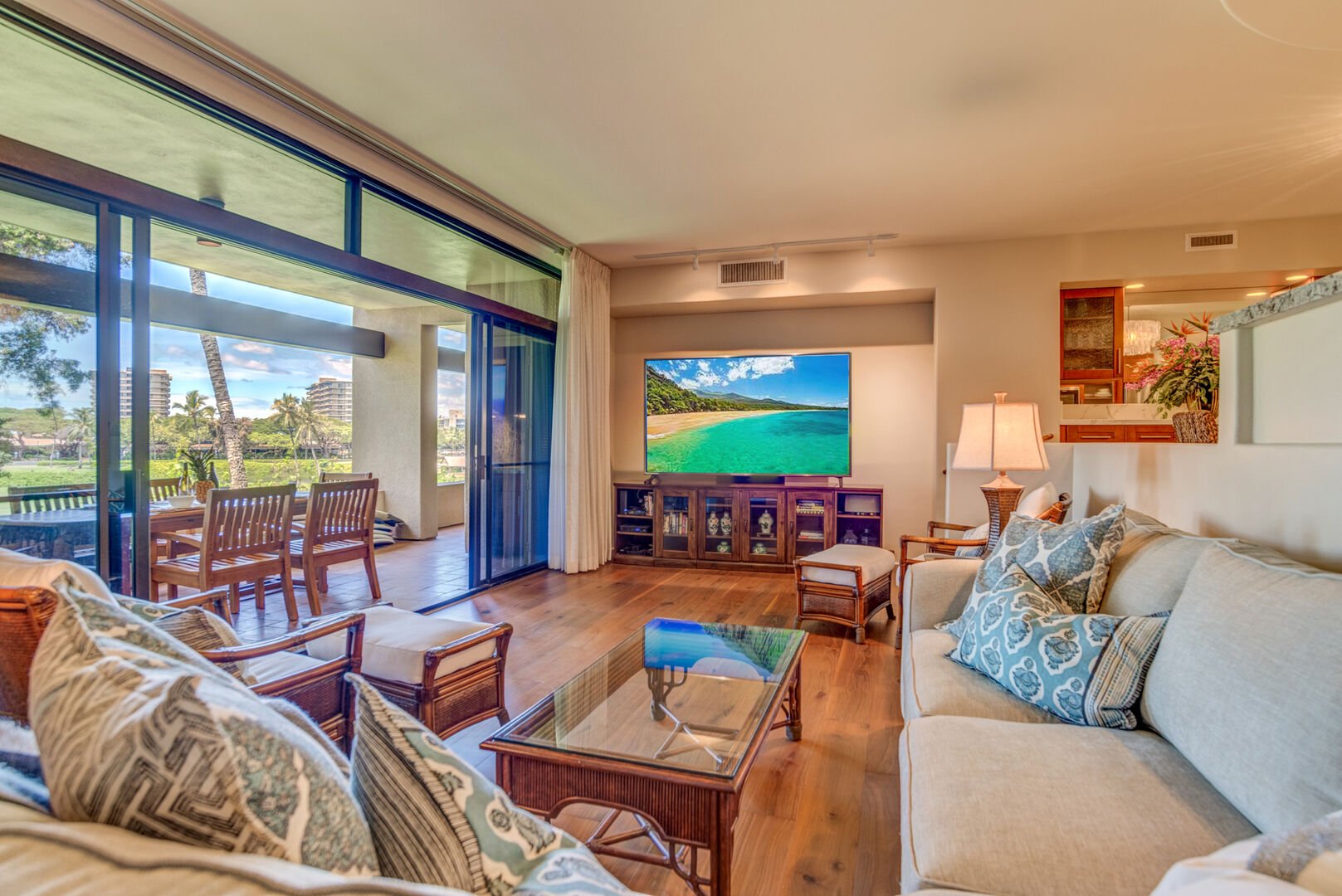
To effectively navigate the high-end property market, one must first deconstruct the common penthouse suites booking mistakes that plague even seasoned planners. The most pervasive error is the “Marketing-to-Mechanical Misalignment,” wherein the aesthetic profile of a unit—the finishings, the views, the size—is given priority over the building’s operational record. In reality, a unit with exquisite marble cladding is useless if its localized HVAC loop is tied to an aging building-wide system prone to failure under peak load. Planners often ignore the “back-of-house” reality, failing to request data on lift-bank exclusivity, service-entry latency, or the maintenance history of the unit’s independent life-support systems.
Another significant issue is the failure to account for “Vertical Transit Latency.” In a 90-story tower, the physical distance between the lobby and the penthouse is a logistical barrier. If the booking agreement does not stipulate priority access or dedicated service-lift availability, the occupant may find themselves trapped in a cycle of transit delays. Recognizing these common penthouse suites booking mistakes requires a shift toward an audit-led approach. It demands that the booking professional act less like a travel agent and more like a facility auditor. By probing the structural and logistical constraints before signing the contract, the stakeholder moves from a reactive posture—where they deal with failures after arrival—to a proactive one, where the environment is pre-calibrated to their specific performance requirements.
Deep Contextual Background: The Evolution of Vertical Hospitality
The vertical residence has historically followed the rapid densification of the urban core, evolving from simple rooftop shelters into the most critical structural and financial elements of the modern super-tall skyscraper. Early verticality was defined by masonry and static loads; the modern tower, by contrast, is a dynamic, swaying assembly designed to dissipate massive aerodynamic loads. This evolution has fundamentally altered the requirements of the high-altitude occupant.
Today’s tower is a data-rich, sensor-heavy environment. Every system—from the elevators to the air-handling units—is managed by a central building management system (BMS). While this provides unprecedented convenience, it also creates a massive, singular point of failure. If the BMS is compromised, or if the unit’s connection to it is poorly isolated, the penthouse becomes a “soft target.” Recognizing this systemic shift is essential for any professional determining how to bypass the common penthouse suites booking mistakes, as it shifts the focus from traditional physical security to a sophisticated convergence of cyber and structural defense.
Conceptual Frameworks for Asset Evaluation
To evaluate the security and operational health of these assets, we employ three specific mental models:
-
The Systemic Decoupling Model: Identify how much of the penthouse’s functionality depends on the building’s common systems. High-performance units possess localized redundancies—independent alarm monitoring, secondary access control, and dedicated power for environmental systems—which insulate the occupant from building-wide system compromises or maintenance cycles.
-
The Circulation-Efficiency Index: In high-cost residential units, internal circulation is often a source of wasted capital and security risk. We evaluate plans based on their “Livable-to-Transit” ratio, ensuring that the footprint prioritizes functional activity over inefficient hallway and vestibule space.
-
The Operational Redundancy Audit: Elite assets must have verified, dual-path redundancies for both power and connectivity. We categorize infrastructure by its criticality: essential utilities (environmental, security) vs. elective luxury (concierge, common-area clubs).
Key Categories and Operational Variations
| Category | Typical Threat Profile | Primary Operational Demand |
| The Full-Floor Pavilion | High-level targeted intrusion | Constant 24/7 onsite perimeter control |
| The Vertical Duplex | Complex access-point management | Internal lift/service-bridge hardening |
| The Terrace-First Estate | Extreme external exposure | Dynamic perimeter sensing/Shielding |
| The Crown Unit | Digital/BMS system vulnerability | Cyber-physical isolation protocols |
Decision Logic: When evaluating potential candidates, avoid the common penthouse suites booking mistakes by prioritizing the “Building-Unit Integration Ratio.” A facility that maintains security and maintenance protocols independent of the general building management team is significantly more resilient than one that relies on a single, shared, and likely overworked staff.
Detailed Real-World Scenarios
-
The BMS Intrusion Scenario: An external party compromises the tower’s central HVAC controller to create an environmental hazard in the penthouse. Constraint: The unit’s climate control is tied to the central system. Decision: Install an independent, air-gapped climate management system, ensuring the occupant retains control regardless of the building’s digital state.
-
The Lift-Access Vulnerability: Unauthorized access via a service elevator occurs due to oversight in the booking terms. Decision: A high-resiliency agreement must feature an encrypted, multi-factor credential requirement for the lift’s top-floor lockout. Avoiding this is key to bypassing the common penthouse suites booking mistakes that compromise privacy.
Planning, Cost, and Resource Dynamics
The economic profile of these assets involves high upfront costs and significant recurring operational expenditures. The “Complexity Premium” of managing a residence at extreme heights is where value-conscious planning becomes essential.
| Cost Component | Relative Impact | Variability |
| Cyber-Physical Hardening | 30% | Very High |
| On-Site Staffing/Security | 40% | Fixed |
| Access Control/Hardware | 20% | Medium |
| Emergency Redundancy/Backups | 10% | High |
Note: Managers must account for the opportunity cost of low-security design. An asset with weak operational protocols is a long-term liability that requires higher insurance premiums and constant re-vetting.
The Risk Landscape and Systemic Failure Modes
The landscape of risk in the sector of high-altitude assets is dominated by compounding variables. A single point of failure rarely results in a total loss, but it often triggers a cascade of secondary issues.
-
Environmental Degradation: Constant UV and wind exposure on high-altitude terraces accelerates the aging of materials, including sensors and camera mounts. If these are not replaced on a rigid schedule, they become critical vulnerabilities.
-
Digital Fragility: Complex integrated systems become expensive liabilities if they are not modular. Prioritize assets that allow for independent, component-level upgrades rather than total system replacements, which are logistically infeasible at height.
Governance, Maintenance, and Long-Term Adaptation
To effectively avoid common penthouse suites booking mistakes, one must adopt a proactive, layered governance model:
-
Quarterly Diagnostic Cycles: Automated, non-destructive testing of HVAC, electrical redundancies, and leak-detection arrays.
-
Trigger-Based Audits: Establish clear thresholds for when to upgrade a system rather than merely repairing it. A standard rule is to upgrade if maintenance costs exceed 20% of the replacement value within 12 months.
-
Digital Twins: Maintain a comprehensive record of every system layout and repair to ensure future adaptations rely on precision rather than guesswork.
Measurement, Tracking, and Evaluation
Evaluation should focus on the delta between expected and actual performance:
-
Leading Indicators: Energy consumption per square foot, frequency of smart-system error codes, and service response time logs for mechanical issues.
-
Lagging Indicators: Total maintenance cost relative to industry benchmarks for similar-tier assets.
-
Qualitative Signals: Client satisfaction with the “frictionlessness” of the transit from the lobby to the unit, which correlates strongly with the efficiency of the underlying mechanical and digital systems.
Common Misconceptions and Oversimplifications
-
“High-floor units are inherently better.” Elevation increases risk exposure. The most secure units prioritize the building core over the perimeter.
-
“Buildings are static structures.” Super-tall towers are dynamic systems that move; this movement must be accounted for in the structural integrity of the finishes.
-
“Smart systems are a risk-mitigation tool.” Without manual, physical overrides, over-automation is a major risk factor.
-
“The view is the defining feature.” The view is a marketing metric. Mechanical reliability is the defining feature of a premium residence.
Conclusion
Understanding the landscape of common penthouse suites booking mistakes is an exercise in discerning the intersection of architectural ambition and engineering reality. By focusing on the structural realities of vertical habitation and rejecting superficial indicators of prestige, one can identify residences that serve as high-performance, resilient assets. The future of this market belongs to those who view the residence not as a trophy, but as a sophisticated, adaptable system that must be managed with the same rigor as an industrial installation. In the final analysis, the value of these assets lies in their ability to provide a consistent, high-functioning environment regardless of the external conditions, proving that even at the highest level, the foundation—mechanical, digital, and logistical—is everything.