Skyline Lifestyle Destinations USA: A Diagnostic Asset Audit
The modern urban landscape is increasingly defined by its verticality. In cities across the United States, the skyline has shifted from a mere collection of commercial hubs to a multi-layered ecosystem of residential, social, and professional engagement. This transition signals a fundamental change in how space is consumed at altitude. The “skyline lifestyle” is no longer a niche luxury; it has become an integrated, high-performance mode of existence that demands a new diagnostic approach to architecture, urban planning, and resource management.
For the investor or the serious inhabitant, engaging with these environments requires more than a simple appreciation for the view. It requires an understanding of the mechanical, logistical, and social infrastructure that sustains life at the crown of a tower. These destinations are complex systems that thrive on efficiency, security, and a specific brand of curated access. When we analyze these locations, we are essentially auditing the success of a building’s ability to turn height into value, stability, and human utility.
This article provides a rigorous, analytical framework for navigating the apex tier of American urban development. We move past the superficial gloss of high-end real estate marketing to focus on the structural realities of high-altitude habitation. By deconstructing the systems that define success in these environments, we establish a definitive roadmap for those tasked with managing, securing, or utilizing these high-prestige assets, ensuring that the experience is defined by resilience and longevity rather than novelty.
Understanding “skyline lifestyle destinations usa”
To investigate the realm of skyline lifestyle destinations usa requires a move away from the assumption that elevation is the primary driver of value. A common misunderstanding suggests that prestige, location, and aesthetic flair are the only indicators of a world-class destination. This is a fatal analytical error. The most resilient and successful destinations are those that have optimized the flow of people, goods, and energy in a way that respects the physical constraints of super-tall engineering.
Oversimplification frequently leads to the “Iconicity Trap”—the belief that a building’s fame guarantees the quality of the life within it. In reality, the best-functioning destinations are often those that prioritize internal systems: vertical transit redundancy, localized thermal regulation, and, perhaps most importantly, the seamless integration of private and public spaces. To successfully identify or develop a high-performance destination in this class, one must adopt a diagnostic mindset, auditing the building’s mechanical DNA to ensure that luxury is not just a visual layer, but a fundamental operational reality.
Deep Contextual Background: The Evolution of Vertical Habitats
The trajectory of vertical living in the United States traces back to the mid-20th-century development of the glass curtain wall and high-speed elevator technology. What began as a commercial necessity—concentrating offices in dense hubs—quickly expanded into the residential sector. Early vertical residences were often viewed as secondary, a novelty for those who prioritized status over functionality. However, as urban density increased, the demand for “complete systems”—buildings that house a restaurant, office space, residence, and social club—became the new standard.
This evolution is fundamentally a story of engineering success. The current generation of super-tall structures must manage complex aerodynamic forces that were previously ignored. They must act as thermal batteries, absorbing, storing, and rejecting heat in ways that minimize the massive energy demands of high-altitude glass façades. The contemporary landscape of skyline lifestyle destinations usa is characterized by this shift toward “total environment” design, where the building itself serves as the filter between the occupant and the challenging, high-intensity environment of the upper atmosphere.
Conceptual Frameworks for Asset Management
To effectively evaluate the success of a vertical environment, we employ three specific mental models:
-
The Systemic Decoupling Model: Identify how much of the destination’s functionality depends on the building’s broader common systems. High-performance units possess localized redundancies—independent HVAC, independent water filtration, and private high-speed transit—which insulate the user from building-wide failures.
-
The Aerodynamic-Thermal Audit: Every tower creates unique micro-climates at its peak. Successful destinations are those where the facade engineering is specifically calibrated to manage the wind-tunnel and solar-gain effects unique to that building’s geometry.
-
The Operational Latency Framework: Costs and frustrations scale with time and distance. Every minute a staff member spends navigating a congested lobby or an inefficient lift bank is a cost passed to the occupant. Efficient destinations prioritize “frictionless transit,” minimizing the time between the street level and the destination floor.
Key Categories and Architectural Variations
| Category | Risk Profile | Primary Operational Demand |
| The Full-Service Tower | High-system complexity | Continuous maintenance of common zones |
| The Residential Pavilion | High-utility requirements | Focused, private facility management |
| The Mixed-Use “Crown” | Complex logistics/Access control | Managing multi-user security flows |
| The Adaptive Reuse Loft | Structural constraints | Remediation of MEP systems |
Decision Logic: When evaluating potential locations within skyline lifestyle destinations usa, prioritize the “Service-to-Density Ratio.” If a facility serves too many occupants with too few vertical transit paths, the destination will inevitably experience service degradation, regardless of how “luxurious” the design might appear.
Detailed Real-World Scenarios
-
The Multi-Day Executive Summit: The requirement is seamless security and high-speed, private meeting space. Decision: Prioritize buildings that offer dedicated elevator banks that bypass the public atrium. Failure mode: Inadequate localized IT infrastructure that relies on a single, shared fiber-optic line for the entire building.
-
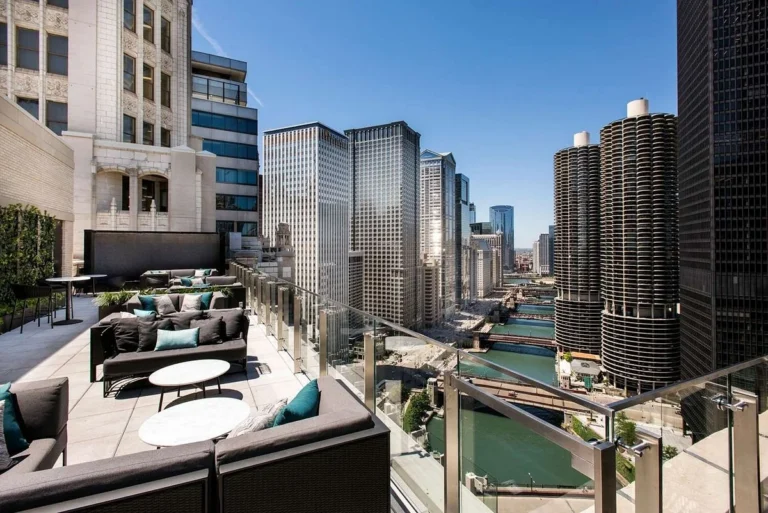
The Vertical Biophilic Retreat: The goal is high-quality terrace usage at 60+ stories. Decision: Choose units with integrated, automated wind-shielding and irrigation. Second-order effect: Without automated monitoring, the environmental stress of high-altitude winds destroys plant life within weeks, turning a “lifestyle” amenity into a liability.
Planning, Cost, and Resource Dynamics
The economic profile of these destinations involves significant upfront capital and massive recurring expenditures. The “Complexity Premium” of managing a location at extreme heights is the defining financial factor.
| Cost Component | Relative Impact | Variability |
| Mechanical System Servicing | 30% | Fixed |
| Vertical Transport/Security | 25% | High |
| Facade/Envelope Maintenance | 25% | Medium |
| Contingency/Resilience Fund | 20% | High |
Note: One must account for the opportunity cost of space. A high-altitude destination with poorly utilized terrace square footage represents a significant, recurring loss of latent value, as it requires maintenance without providing usage utility.
The Risk Landscape and Systemic Failure Modes
Failure in these environments is often compounding. A minor issue with climate control, for instance, leads to catastrophic service-staff overtime as they attempt to manually stabilize the environment.
-
Digital Fragility: Smart systems integrated into the structure are liabilities if they are not modular. Prioritize environments that allow for component-level upgrades rather than total system replacements.
-
Thermal Fatigue: Expansion and contraction of materials at extreme heights lead to seal failures. If not addressed by a rigid inspection schedule, these failures compromise the building envelope and lead to massive, unsustainable energy spikes.
Governance, Maintenance, and Long-Term Adaptation
To master the environment of skyline lifestyle destinations usa, planners must adopt a proactive governance structure:
-
Quarterly Diagnostic Cycles: Automated testing of HVAC, electrical redundancies, and leak-detection arrays.
-
Trigger-Based Audits: Establish clear thresholds for when to upgrade a system rather than merely repairing it. A common rule is to upgrade if maintenance exceeds 20% of the replacement cost within a 12-month period.
-
Building Digital Twins: Maintain a comprehensive record of every system layout and repair to ensure future adaptations rely on precision rather than guesswork.
Measurement, Tracking, and Evaluation
Evaluation should focus on the delta between expected and actual performance:
-
Leading Indicators: Energy consumption per square foot, frequency of smart-system error codes, and service response time for mechanical issues.
-
Lagging Indicators: Total expenditure per occupancy day relative to industry benchmarks for similar-tier destinations.
-
Qualitative Signals: User feedback regarding the “frictionlessness” of the transit from the lobby to the unit, which correlates strongly with the efficiency of the underlying mechanical systems.
Common Misconceptions and Oversimplifications
-
“High altitude is always better.” Extreme height increases wind and solar stress, necessitating significantly higher maintenance costs than mid-level units.
-
“Buildings are static structures.” Super-tall towers are dynamic systems that move; this movement must be accounted for in the structural integrity of the finishes.
-
“Smart technology equals efficiency.” Without manual physical overrides, over-automation in high-altitude environments is a major risk factor.
-
“Prestige is a metric of success.” Brand name is a marketing tool. Operational uptime is the only metric that matters for a long-term asset.
Conclusion
Understanding the landscape of skyline lifestyle destinations usa is an exercise in discerning the intersection of architectural ambition and engineering reality. The true apex of these environments is found where technical performance meets human-centric comfort. By focusing on the structural realities of vertical life and rejecting superficial indicators of prestige, one can identify locations that serve as high-performance, resilient assets. In the final analysis, the value of skyline lifestyle destinations usa lies in the ability to provide a consistent, high-functioning environment regardless of the external conditions, proving that even at the highest level, the foundation—mechanical and logistical—is everything.