Best Penthouse Suites for Corporate Hosting: A Strategic Operational Audit
The selection of a penthouse suite for corporate hosting serves as a decisive signal of organizational intent. It is an environment where the architecture of the space must function as an extension of the host’s brand, influence, and operational precision. Unlike a conventional boardroom or a standard hotel function space, the penthouse introduces a layer of environmental complexity that, when managed effectively, can catalyze high-level decision-making. However, the inherent friction—ranging from the logistics of vertical transit to the technical challenges of maintaining privacy—means that the selection process requires a rigorous analytical framework.
Many corporate planners approach these environments with a focus on visual impact, neglecting the fundamental utility of the infrastructure. A space that impresses during an initial walkthrough may prove entirely unfit for a multi-day executive summit due to poor acoustic isolation, inconsistent connectivity, or a lack of flexible staging areas. The modern corporate environment demands a seamless integration of digital bandwidth, physical security, and ergonomic adaptability. When organizations fail to account for these systemic realities, they risk disruptions that can undermine the very credibility they intended to project.
This analysis provides an exhaustive audit of the high-altitude hosting market. We move beyond the glossy marketing of luxury real estate to examine the technical foundations that support successful executive engagement. By deconstructing the systemic requirements of these venues, we establish a robust framework for identifying properties that function not merely as residences, but as reliable, high-performance hubs for professional diplomacy. The focus remains on resilience, utility, and long-term viability, providing a definitive reference for those seeking to master the complexities of hosting at the absolute summit of urban infrastructure.
Understanding “best penthouse suites for corporate hosting”
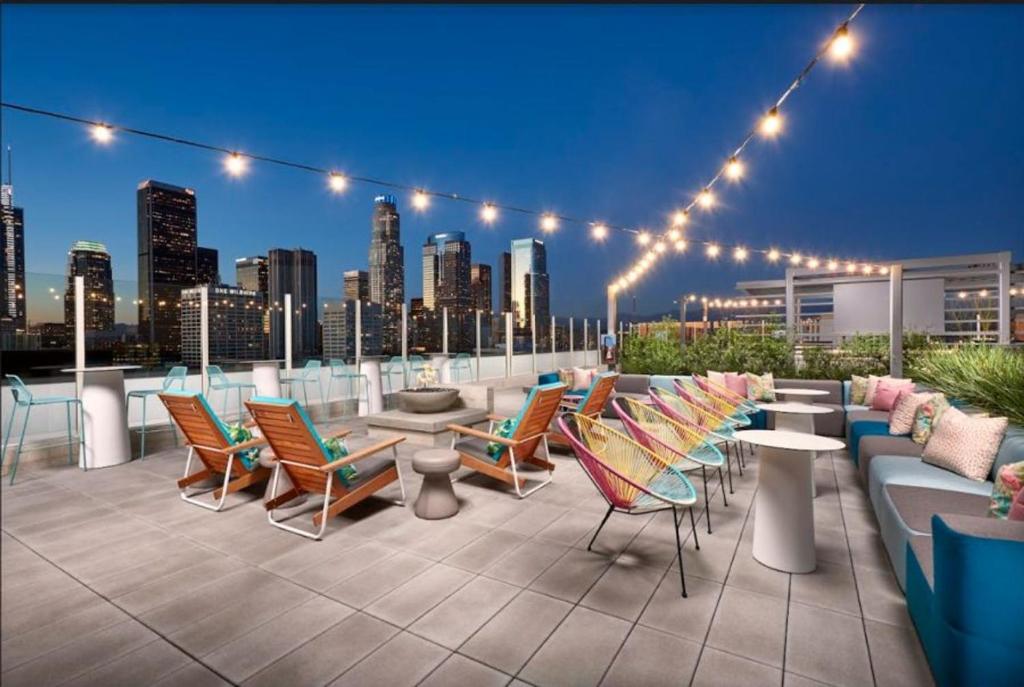
When sophisticated corporate planners evaluate the best penthouse suites for corporate hosting, they often fall victim to the “Aesthetic Trap.” This is the common belief that the grandeur of a view or the scale of an atrium signifies a venue’s readiness for business. While visual impact matters, it remains secondary to operational stability. The primary challenge in these environments is “Logistical Throughput.” A penthouse might offer an impressive foyer, but if the single elevator bank is shared with residential tenants, the host loses control over the arrival experience. This friction can degrade the sense of exclusivity and timing essential for a high-stakes corporate gathering.
Furthermore, the professional traveler must guard against the “Connectivity Fallacy.” Marketing materials frequently tout “high-speed Wi-Fi,” yet they rarely mention whether this network is shared with the building’s broader public-facing infrastructure. For a corporation dealing with sensitive intellectual property or requiring seamless video-conferencing stability, a shared network represents an unacceptable security risk. Identifying the best penthouse suites for corporate hosting requires a forensic approach. The planner must audit the suite’s digital topology, verify the presence of air-gapped network routing, and confirm that the property can provide physical security personnel who are authorized to operate within the penthouse’s specific access-control layers. Mastery of this domain requires a departure from traditional booking practices toward a procurement strategy based on technical due diligence.
Deep Contextual Background: The Evolution of the Vertical Boardroom
The emergence of the vertical boardroom can be traced to the late 20th-century trend of the “Executive Sanctuary.” As business environments became increasingly commodified, leaders sought out spaces that offered both extreme privacy and a vantage point above the urban fray. The penthouse, by virtue of its position at the crown of the city, became the ultimate manifestation of this demand.
However, the rapid adoption of these spaces occurred without a corresponding standard for corporate-grade infrastructure. Early attempts to host in these suites were plagued by mechanical failures, acoustic leakage, and the inherent difficulty of providing top-tier service in a structure designed for silence. The modern era of hosting has seen a significant correction. Today’s premier properties are now purpose-built with dedicated service elevators, independent HVAC loops, and reinforced infrastructure that supports the weight of high-end AV equipment. This shift has transitioned the penthouse from a symbolic location to a functional, resilient hub for global commerce.
Conceptual Frameworks for Asset Evaluation
To evaluate a suite’s viability for corporate deployment, we utilize four distinct frameworks:
-
The Operational Isolation Model: Does the suite function as an island? Can it be accessed and managed without crossing paths with general building residents or hotel guests? Isolation is the foundation of privacy, which is the foundation of corporate confidentiality.
-
The Digital-Architecture Audit: We classify the network capacity not by advertised speed, but by stability and physical isolation. The presence of a dedicated, hardwired server closet or a secure, non-public data gateway serves as the primary indicator of a true professional environment.
-
The Acoustic-Neutrality Index: In high-altitude environments, resonance is a frequent problem. We measure a space by its ability to prevent sound from the “public” areas of the suite (e.g., dining, lounge) from encroaching on the “private” work areas (e.g., meeting rooms, executive offices).
-
The Service-Throughput Analysis: How does the building handle a surge in demand? We audit the facility’s ability to manage concurrent requirements—such as a large catering delivery and an executive arrival—without creating logistical friction at the lobby or elevator interface.
Key Categories and Operational Variations
| Category | Typical Mechanical Risk | Primary Asset Utility |
| The Dedicated Event-Penthouse | Lower residential “feel” | High professional throughput |
| The High-End Residential Hybrid | Management policy conflicts | Supreme exclusivity/privacy |
| The Historic Trophy-Tower | MEP limitations/Structural constraints | High narrative value/Brand signaling |
| The New-Build Glass Pavilion | Thermal/Acoustic management | Unmatched digital infrastructure |
Decision Logic: When investigating the best penthouse suites for corporate hosting, start with the “Access Override.” If the hosting organization cannot request a dedicated elevator lift or a secure, private arrival corridor for their executive team, the venue will fail to meet the standard of a high-security corporate event.
Detailed Real-World Scenarios
-
The Intellectual Property Crisis: A client requires an air-gapped conference room for a confidential negotiation. Decision: Do not rely on the suite’s built-in technology. Request a secure, temporary network drop, and verify that the room’s structural walls are not glass-backed, which allows for laser-microphone eavesdropping. Second-order effect: This level of diligence signals to the client that the organization treats their data with the same intensity as its own.
-
The Logistical Bottleneck: An executive team arrives via a public elevator, immediately diminishing their authority upon entry. Decision: Pre-negotiate a “private entry protocol” that utilizes service lifts, provided they are properly staged and staffed by professional attendants. This preserves the “first impression” of the meeting.
Planning, Cost, and Resource Dynamics
The economic profile of high-altitude corporate hosting is defined by the “Risk-Mitigation Premium.” The goal is to pay for the infrastructure that ensures success rather than the aesthetics that merely satisfy the visual expectation.
| Cost Component | Relative Impact | Variability |
| Digital/Network Infrastructure | 35% | Fixed |
| Logistical Access/Security | 30% | High |
| Acoustic/Environmental Control | 20% | Medium |
| Catering/Support Operations | 15% | High |
Note: The best penthouse suites for corporate hosting often cost significantly more per square foot, but the savings gained in avoiding logistical failures—such as a delayed board meeting due to elevator congestion—far outweigh the nominal rental difference.
The Risk Landscape and Systemic Failure Modes
Systemic failure in these environments often occurs due to “Dependency Overload.” This happens when the suite’s AV, lighting, and HVAC systems are all managed by a single, complex control panel that is prone to user error or mechanical lockup.
-
Credential Bloat: Properties that issue physical keys or generic access badges to dozens of vendors (florists, caterers, lighting techs) create an impossible security environment. The premier hosting venues restrict access via biometric or token-based management that logs every movement.
-
The Network-Interference Conflict: High-end residential buildings often use “smart home” protocols that can conflict with a guest’s own AV equipment. The best penthouse suites for corporate hosting will offer a physical “bypass mode” that allows the host to run their own infrastructure entirely independent of the suite’s internal automation.
Governance, Maintenance, and Long-Term Adaptation
To effectively manage a multi-day corporate summit, the host must adopt a proactive, layered governance model:
-
The Pre-Event Technical Walkthrough: Perform a 48-hour diagnostic test of every system, from the lighting zones to the internal network speed. Document every deviation from the property’s claims.
-
The Protocol-Staging Phase: Establish strict rules for all service staff, including mandatory “quiet-zones” during sensitive meeting hours.
-
The Adaptive Response Plan: Ensure the booking agreement contains a clear “Service-Failure Clause,” which mandates the property provide a functional alternative (such as a fully equipped boardroom on a lower floor) if the penthouse infrastructure suffers a critical failure.
Measurement, Tracking, and Evaluation
Evaluation should focus on the delta between expected corporate performance and actual logistical stability:
-
Leading Indicators: Latency stability on the video-conferencing network; the total time elapsed between an executive arrival at the lobby and entry into the suite; the frequency of service interventions (e.g., housekeeping, minibar re-stocking) that interrupt meetings.
-
Lagging Indicators: Total time lost due to technical or logistical friction; the percentage of the event budget consumed by “remedial service costs.”
-
Qualitative Signals: The “presence” of the suite. A successful penthouse hosting environment feels like a high-performance, private office—not a temporary hotel room.
Common Misconceptions and Oversimplifications
-
“Penthouse suites are all the same.” They range from historic residential conversions to purpose-built event venues. The differences are fundamental, not aesthetic.
-
“Concierge service is professional support.” Hospitality service and business support are distinct. Ensure the property provides technical help, not just meal delivery.
-
“High-floor isolation is sufficient.” True privacy is structural and digital, not just a matter of elevation.
-
“Digital security is standard.” In the luxury travel market, it is almost never standard. Assume that public-facing networks are inherently insecure.
Conclusion
Understanding the best penthouse suites for corporate hosting is fundamentally an exercise in professional due diligence. It requires a transition from viewing the penthouse as a luxury residence to seeing it as a high-performance business environment. By focusing on the structural isolation of the suite, the hardening of the network infrastructure, and the rigorous management of logistical throughput, organizations can reclaim control over the efficacy of their executive engagements. The future of elite corporate hosting belongs to those who view their environment as a managed, high-stakes infrastructure, not just a prestigious location. When these boundaries reach a state of professional mastery, the asset becomes a source of genuine competitive advantage, proving that even at the summit of a city, the technical foundation remains the absolute measure of success.